
grammar, explained
Grammar that actually makes sense.
Punctuation marks, parts of speech, and the rules behind them — explained briefly, with real examples, so you can look something up and get straight back to writing.
WHY IT MATTERS — SAME WORDS, ONE COMMA MOVED
A woman, without her man, is nothing.
Meaning: she needs him.
Punctuation, mark by mark
Thirteen marks, each doing one specific job. Open an example, check the common mistake, or read the full guide.
Comma
Separates items, clauses, and pauses in a sentence.
See example
“I bought apples, oranges, and pears.”
Apostrophe
Shows possession or marks a missing letter.
See example
“It’s the dog’s bowl.”
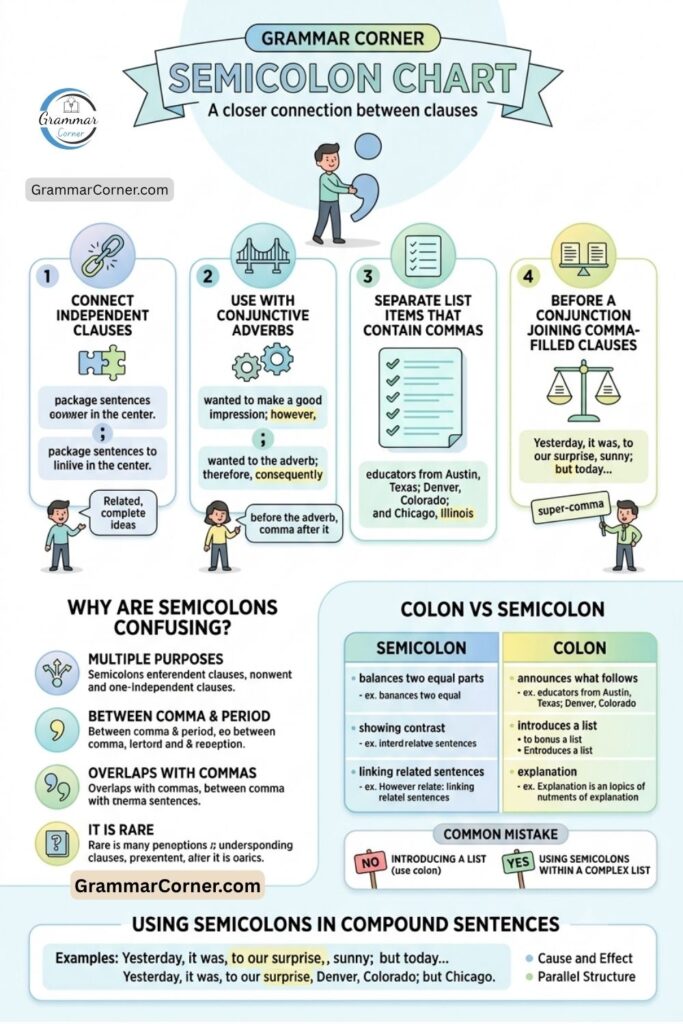
Semicolon
Joins two closely related independent clauses.
See example
“I was tired; I kept working.”
Colon
Introduces a list, explanation, or quote.
See example
“She had one goal: to win.”
Em Dash
Sets off an abrupt break, or adds emphasis.
See example
“He was right — as always.”
Hyphen
Joins two or more words into one compound term.
See example
“A well-known author.”
Ellipsis
Shows an omission, pause, or trailing thought.
See example
“I wonder if…”
Quotation Marks
Marks exact spoken or quoted words.
See example
She said, “Wait for me.”
Period
Ends a complete statement or abbreviation.
See example
“The meeting starts at noon.”
Question Mark
Ends a direct question.
See example
“Where did you park?”
Exclamation Mark
Shows strong emotion or emphasis.
See example
“Watch out!”
Parentheses
Adds extra, non-essential information.
See example
“The results (see chart) were clear.”
Asterisk
Flags a footnote, exception, or omitted word.
See example
“Free shipping.* *Restrictions apply.”
often confused
Parts of speech, in one sentence
Every part of speech shows up in the sentence below. Click one to see where it hides — or try quiz mode and test yourself.
Wow! She quickly gave the clever fox a bone, but it happily ran under the old bridge.
Click a part of speech above to see it highlighted.
Adverb modifies
Describes a verb, adjective, or another adverb.
e.g. quickly, happily, very
Full Guide →Interjection emotion
Expresses sudden emotion, often standing alone.
e.g. Wow!, Ouch!, Hey!
Full Guide →Grammar Charts
These are free printable grammar charts. You can download each chart as a PDF — just visit the page below and click the download button beneath the chart you want.
Whether you’re a student, teacher, or ESL learner, these anchor charts make it easy to review grammar rules at a glance or print them out for classroom and homeschool use.
Each chart comes with a quick reference guide and a one-click PDF download, so you can study on screen or keep a hard copy handy.. Visit the page below and click the download button under each chart.
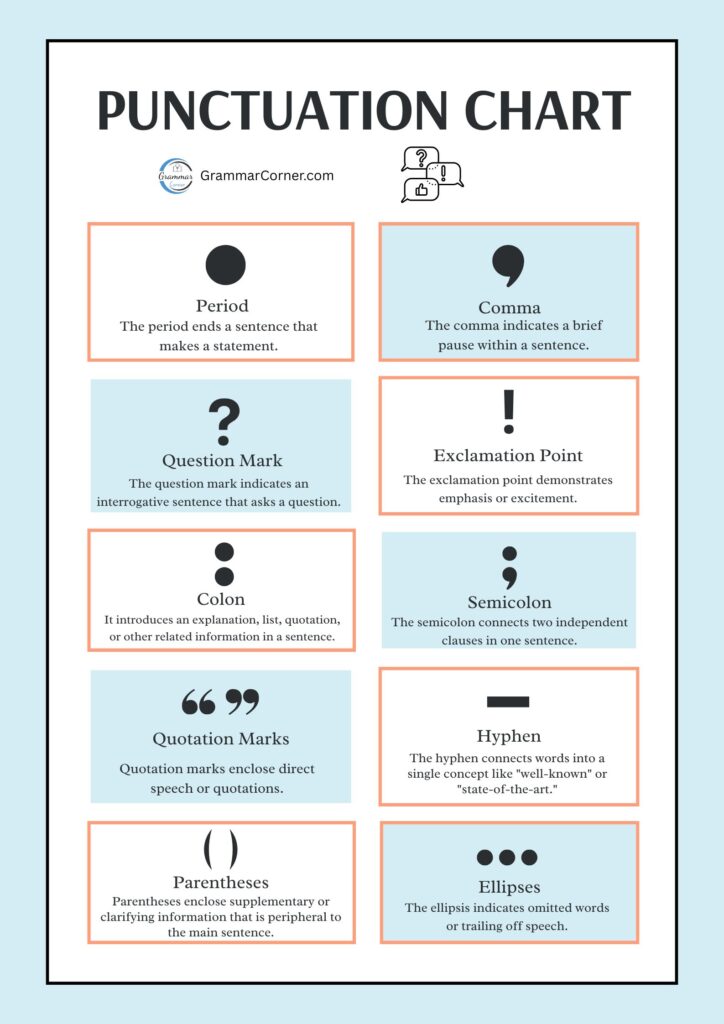
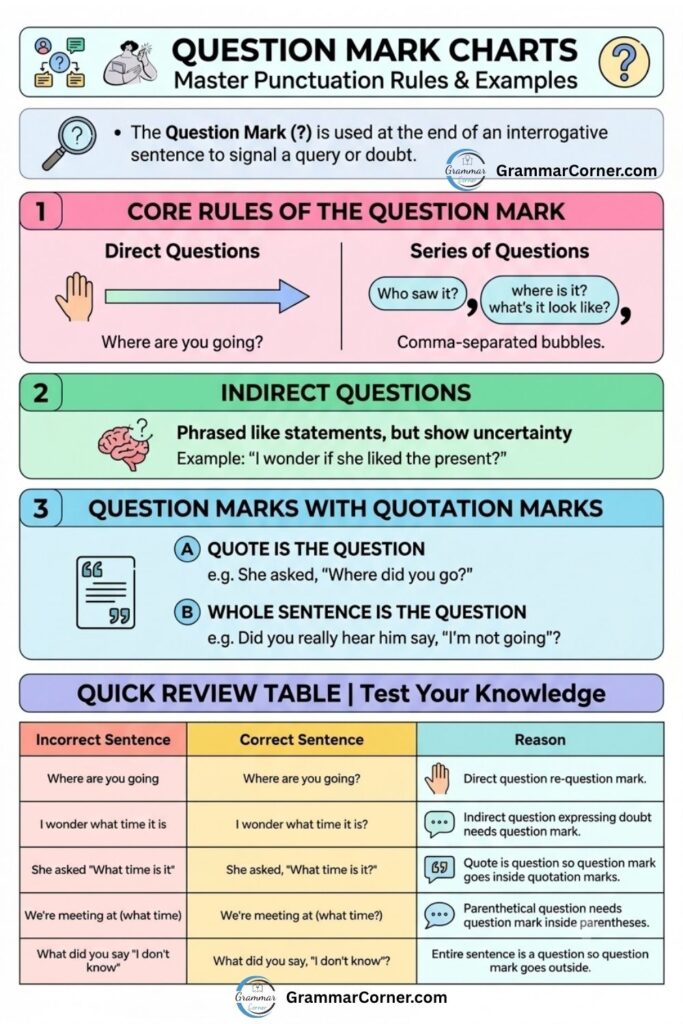
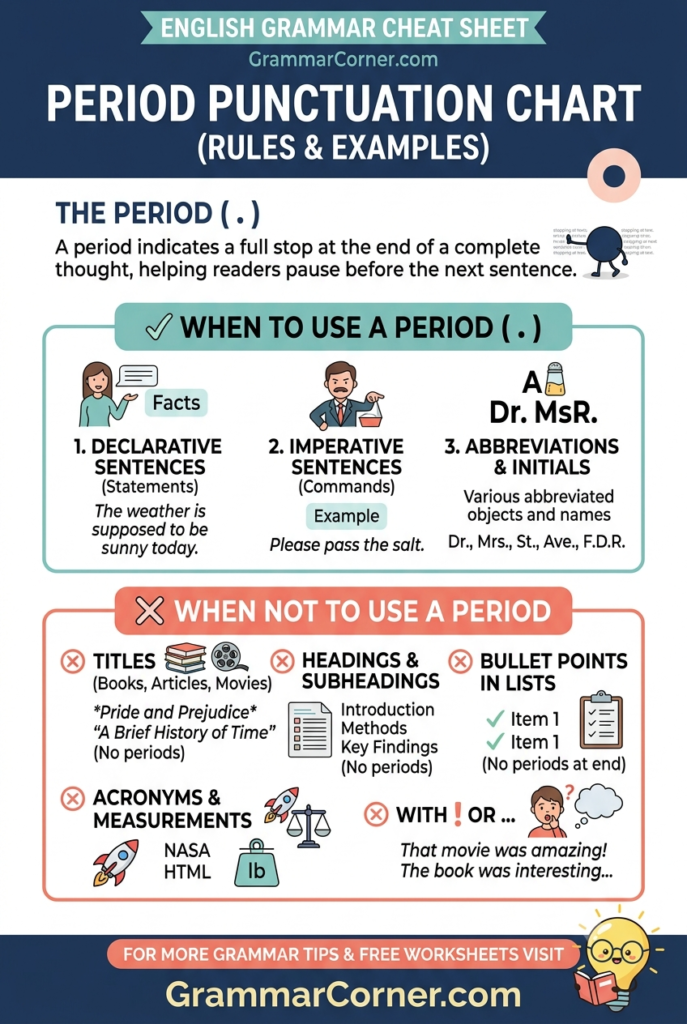
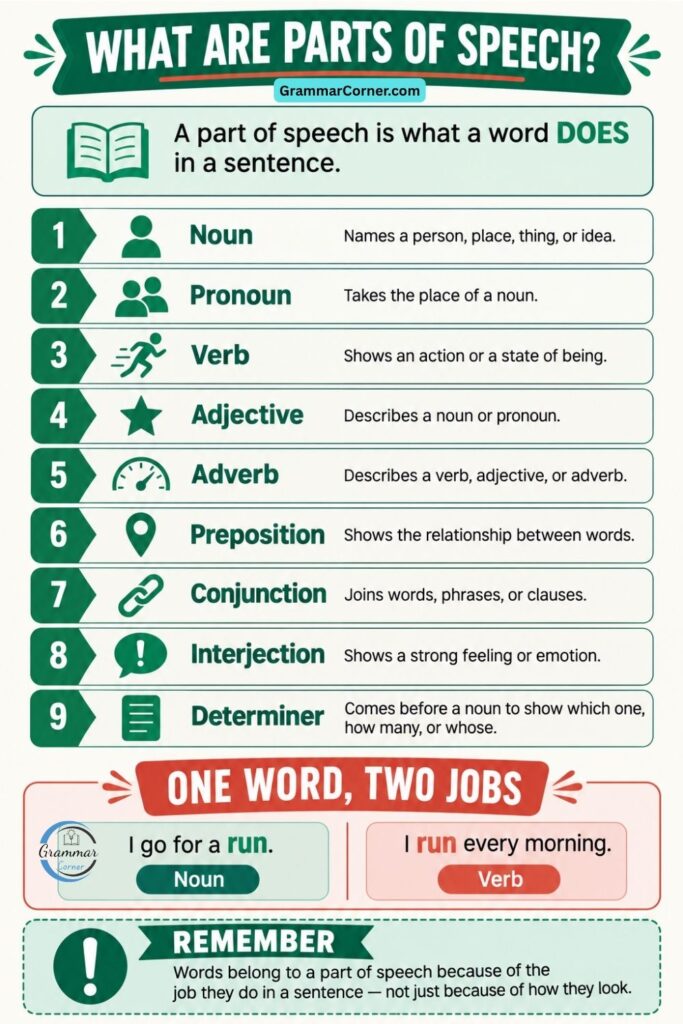
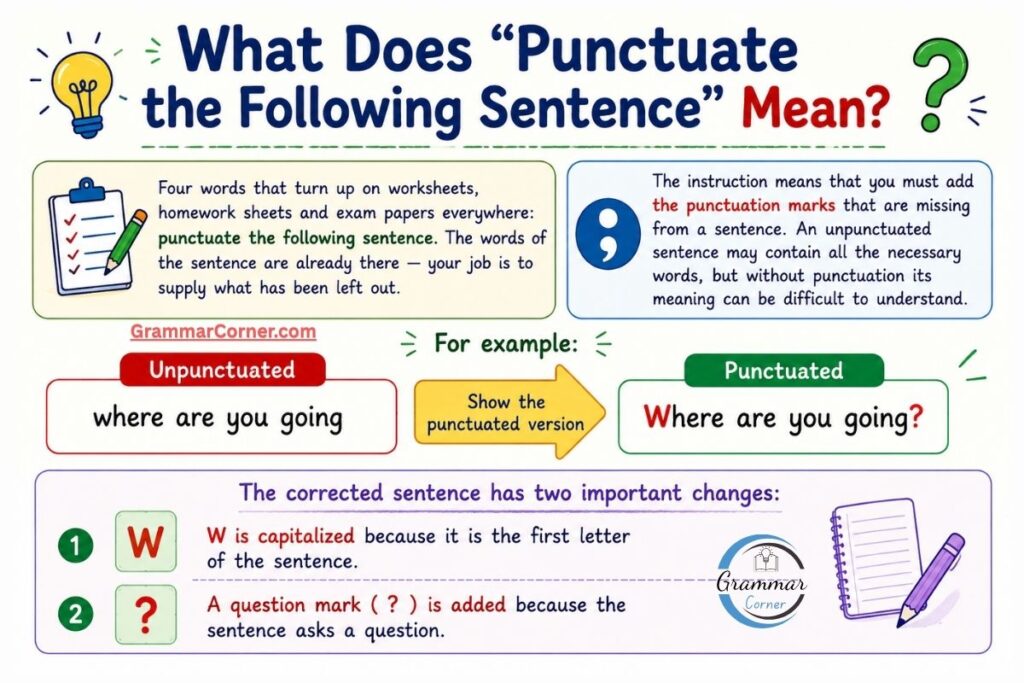
What does punctuation mean? Punctuation is the system of marks used in writing to make sentences clear and easy to understand. It helps readers know where to pause, stop, ask questions, or show strong emotions.
Punctuate the following sentences with answers and practice punctuation exercises to improve your grammar, writing skills, and sentence structure. These activities help students learn how to use commas, periods, question marks, apostrophes, and other punctuation marks correctly.
All 12 tenses, in one place
English builds every tense from the same two ingredients — when (present, past, future) and aspect (simple, continuous, perfect, perfect continuous). Each tense below links to its chart and a set of practice conversation questions.
