Future Perfect Continuous Conversation Questions and Answers
What Is the Future Perfect Continuous Tense?
Future perfect continuous conversation questions help learners to discuss about an activity that will have been continuing for a period of time up to a particular point in the future. The tense is especially useful when the speaker wants to emphasize duration. Instead of simply saying what will happen, you can explain how long an activity will have been continuing by a future time.
The basic structure is:
For example:
A question changes the order:
How long will you have been working here by next June?
Model answerI will have been working here for five years by next June.
Future Perfect Continuous Conversation Questions for Beginners
Start with simple questions about activities that may continue until a future time.
| No. | Question | Model Answer |
|---|---|---|
| 1 | How long will you have been studying by the end of today? | I will have been studying for about four hours. |
| 2 | How long will you have been working by lunchtime? | I will have been working for several hours. |
| 3 | Will you have been sleeping for eight hours by tomorrow morning? | Yes, I will have been sleeping for about eight hours. |
| 4 | How long will you have been waiting by the time the bus arrives? | I will have been waiting for about twenty minutes. |
| 5 | How long will you have been using your phone by the end of the day? | I will have been using it for several hours. |
| 6 | Will you have been reading for an hour by dinner time? | Yes, I probably will have been reading for about an hour. |
| 7 | How long will you have been living in your home by the end of the year? | I will have been living there for six years. |
| 8 | How long will you have been learning English by next year? | I will have been learning English for several years. |
| 9 | Will you have been traveling for a whole day by the time you arrive? | Yes, I will have been traveling for almost a full day. |
| 10 | How long will you have been exercising by the time you finish? | I will have been exercising for about an hour. |
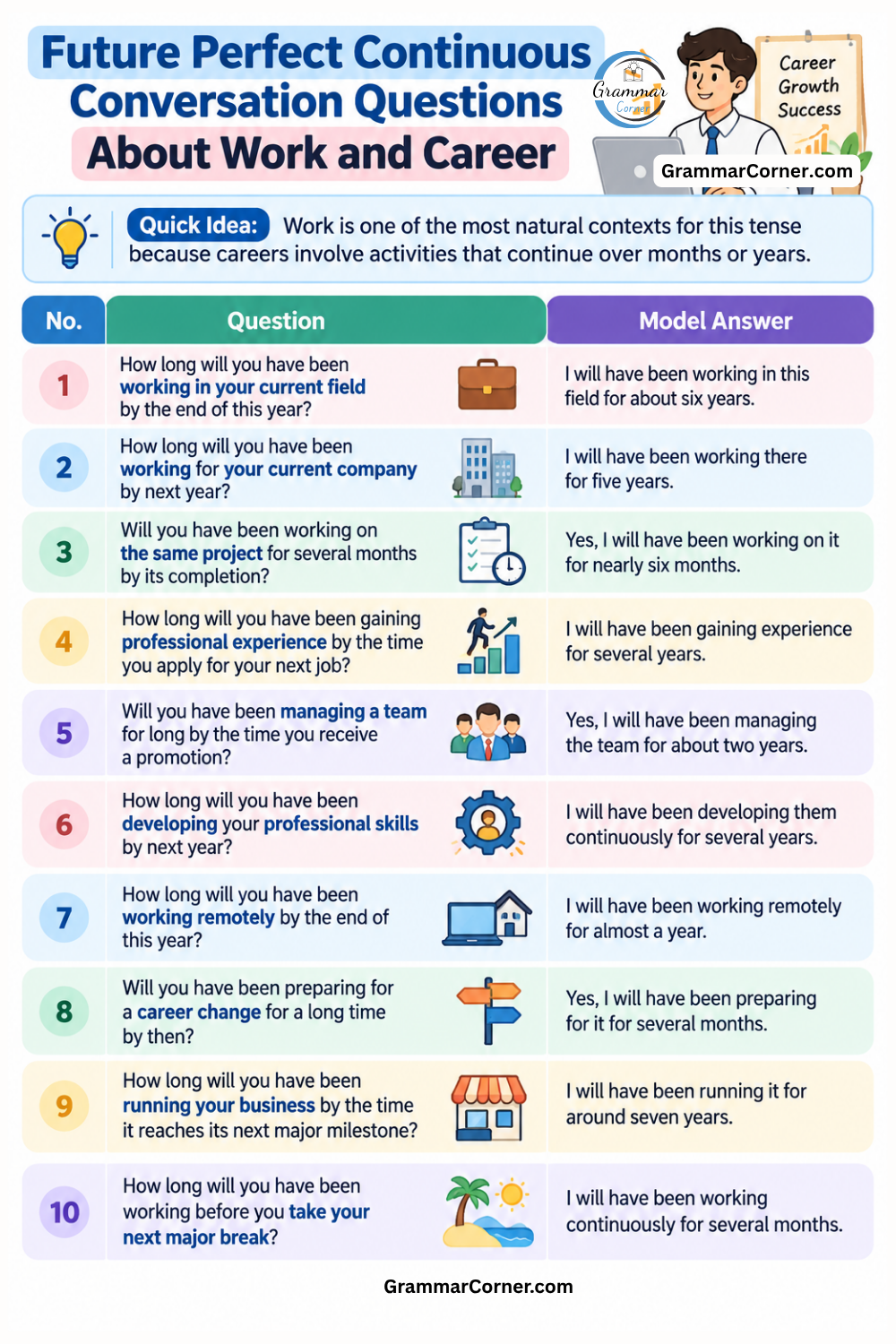
Future Perfect Continuous Conversation Questions About Work and Career
Work is one of the most natural contexts for this tense because careers involve activities that continue over months or years.
| No. | Question | Model Answer |
|---|---|---|
| 11 | How long will you have been working in your current field by the end of this year? | I will have been working in this field for about six years. |
| 12 | How long will you have been working for your current company by next year? | I will have been working there for five years. |
| 13 | Will you have been working on the same project for several months by its completion? | Yes, I will have been working on it for nearly six months. |
| 14 | How long will you have been gaining professional experience by the time you apply for your next job? | I will have been gaining experience for several years. |
| 15 | Will you have been managing a team for long by the time you receive a promotion? | Yes, I will have been managing the team for about two years. |
| 16 | How long will you have been developing your professional skills by next year? | I will have been developing them continuously for several years. |
| 17 | How long will you have been working remotely by the end of this year? | I will have been working remotely for almost a year. |
| 18 | Will you have been preparing for a career change for a long time by then? | Yes, I will have been preparing for it for several months. |
| 19 | How long will you have been running your business by the time it reaches its next major milestone? | I will have been running it for around seven years. |
| 20 | How long will you have been working before you take your next major break? | I will have been working continuously for several months. |
Future Perfect Continuous Questions About Education
Learning is another strong topic because students can discuss how long they will have been studying, practicing, or attending classes.
| No. | Question | Model Answer |
|---|---|---|
| 21 | How long will you have been studying English by the end of this year? | I will have been studying English for about three years. |
| 22 | How long will you have been preparing for your next exam by the test date? | I will have been preparing for it for six months. |
| 23 | Will you have been attending your current school for several years by next summer? | Yes, I will have been attending it for four years. |
| 24 | How long will you have been practicing speaking English by the time you take your exam? | I will have been practicing for nearly a year. |
| 25 | How long will you have been working on your research by the time you submit it? | I will have been working on it for several months. |
| 26 | Will you have been taking English classes for a year by the end of December? | Yes, I will have been taking them for a year. |
| 27 | How long will you have been studying at university by the time you graduate? | I will have been studying there for four years. |
| 28 | How long will you have been preparing for your degree by graduation? | I will have been preparing for it for several years. |
| 29 | Will you have been practicing writing regularly before your final examination? | Yes, I will have been practicing almost every week. |
| 30 | How long will you have been learning your new subject by the end of the semester? | I will have been learning it for about six months. |
Future Perfect Continuous Questions About English Learning
These questions are particularly useful for ESL students.
| Question | Model Answer |
|---|---|
| How long will you have been learning English by next year? | I will have been learning English for five years. |
| How long will you have been practicing speaking by the time you take your test? | I will have been practicing for about eight months. |
| Will you have been reading English books regularly by the end of the year? | Yes, I will have been reading them regularly for several months. |
| How long will you have been writing in English by the time you become an advanced learner? | I will have been writing in English for several years. |
| Will you have been listening to English every day by next month? | Yes, I will have been listening to English daily for several weeks. |
| How long will you have been studying grammar before your next exam? | I will have been studying it for several months. |
| Will you have been speaking English with other learners for long by then? | Yes, I will have been practicing with them for quite a while. |
| How long will you have been building your vocabulary by the end of this year? | I will have been building it consistently throughout the year. |
| Will you have been practicing pronunciation regularly? | Yes, I will have been practicing it several times a week. |
| How long will you have been using English at work by next year? | I will have been using English at work for about two years. |
Future Perfect Continuous Questions About Hobbies
Hobbies provide easy opportunities to discuss activities that continue over time.
| No. | Question | Model Answer |
|---|---|---|
| 31 | How long will you have been playing your favorite sport by next summer? | I will have been playing it for about five years. |
| 32 | How long will you have been learning to play an instrument by your first performance? | I will have been learning for nearly two years. |
| 33 | Will you have been practicing photography for a long time by next year? | Yes, I will have been practicing for several years. |
| 34 | How long will you have been working on your creative project by the time you finish it? | I will have been working on it for about six months. |
| 35 | How long will you have been collecting items for your collection by the end of the year? | I will have been collecting them for nearly ten years. |
| 36 | Will you have been writing regularly by the end of the month? | Yes, I will have been writing almost every day. |
| 37 | How long will you have been gardening by next spring? | I will have been gardening for about three years. |
| 38 | Will you have been practicing your hobby for several years by then? | Yes, I will have been practicing it for quite a long time. |
| 39 | How long will you have been learning photography before taking an advanced course? | I will have been learning it for two years. |
| 40 | Will you have been working on your personal project for months by its launch? | Yes, I will have been working on it for nearly a year. |
Future Perfect Continuous Questions About Health and Fitness
The tense can describe routines that continue over a period of time before a future result or milestone.
| Question | Model Answer |
|---|---|
| How long will you have been exercising by the time you reach your fitness goal? | I will have been exercising regularly for almost a year. |
| How long will you have been following your new routine by next summer? | I will have been following it for about eight months. |
| Will you have been walking regularly by the end of the year? | Yes, I will have been walking regularly for several months. |
| How long will you have been training before your next competition? | I will have been training for six months. |
| Will you have been practicing your new fitness routine for long by then? | Yes, I will have been practicing it for several months. |
| How long will you have been cycling by the time you complete your first long-distance ride? | I will have been cycling for about a year. |
| How long will you have been swimming regularly by next summer? | I will have been swimming regularly for several months. |
| Will you have been following a regular sleep routine by the end of the year? | I hope I will have been following it consistently for several months. |
| How long will you have been training before your first marathon? | I will have been training for nearly a year. |
| Will you have been practicing a healthier lifestyle for long by the time you notice a difference? | Yes, I will have been doing it for several months. |
Future Perfect Continuous Questions About Travel
Travel can involve long periods of planning, saving, driving, flying, exploring, or living abroad.
| No. | Question | Model Answer |
|---|---|---|
| 41 | How long will you have been planning your next trip by the time you leave? | I will have been planning it for about six months. |
| 42 | How long will you have been saving for your holiday by the time you book the tickets? | I will have been saving for almost a year. |
| 43 | Will you have been traveling for several hours by the time you reach your destination? | Yes, I will have been traveling for nearly ten hours. |
| 44 | How long will you have been exploring the country by the time you return home? | I will have been exploring it for three weeks. |
| 45 | Will you have been living abroad for several years by the time you return home? | Yes, I will have been living abroad for about four years. |
| 46 | How long will you have been learning the local language before your trip? | I will have been learning it for several months. |
| 47 | How long will you have been traveling with your friends by the time the holiday ends? | We will have been traveling together for two weeks. |
| 48 | Will you have been preparing your luggage for several days before leaving? | No, I will probably have been preparing it for only a few hours. |
| 49 | How long will you have been driving before reaching the next city? | I will have been driving for about five hours. |
| 50 | How long will you have been exploring new places by the end of your vacation? | I will have been exploring them for nearly two weeks. |
Future Perfect Continuous Questions About Family and Relationships
| Question | Model Answer |
|---|---|
| How long will you have been living with your family by the time you move out? | I will have been living with them for many years. |
| How long will you have been keeping in touch with an old friend by your next reunion? | We will have been keeping in touch for more than a decade. |
| How long will you have been working with your colleagues by the time you change jobs? | I will have been working with them for five years. |
| Will you have been spending more time with your family by the end of the year? | Yes, I hope I will have been spending more time with them. |
| How long will you have been planning the family event by the time it happens? | We will have been planning it for several months. |
| How long will you have been supporting your family by the time your children become adults? | I will have been supporting them for many years. |
| Will you have been living in the same neighborhood for a long time by then? | Yes, I will have been living there for more than ten years. |
| How long will you have been working with your best friend by the time the project ends? | We will have been working together for nearly a year. |
| How long will you have been communicating with your relatives before you visit them? | We will have been communicating regularly for several months. |
| Will your family have been living in the same city for many years by then? | Yes, they will have been living there for more than twenty years. |
Future Perfect Continuous Questions About Daily Life
Everyday routines are useful because they allow learners to talk about duration without needing complicated vocabulary.
| Question | Model Answer |
|---|---|
| How long will you have been living in your current home by the end of the year? | I will have been living here for seven years. |
| How long will you have been commuting by the time you move closer to work? | I will have been commuting for almost two years. |
| Will you have been using public transportation for long by the time you buy a car? | Yes, I will have been using it for several years. |
| How long will you have been following your current routine by next month? | I will have been following it for about six months. |
| How long will you have been cooking at home by the end of this year? | I will have been cooking at home regularly for a year. |
| Will you have been working from home for several months by then? | Yes, I will have been working from home for about eight months. |
| How long will you have been using the same computer by next year? | I will have been using it for five years. |
| How long will you have been shopping online before you change your routine? | I will have been shopping online for several years. |
| Will you have been walking to work for long by the time you change jobs? | Yes, I will have been walking there for about a year. |
| How long will you have been following this daily schedule by the end of the month? | I will have been following it for four weeks. |
Future Perfect Continuous Questions About Technology
Technology gives learners a chance to discuss long-term use, development, testing, research, and adaptation.
| Question | Model Answer |
|---|---|
| How long will you have been using your current phone by next year? | I will have been using it for three years. |
| How long will developers have been working on the new software by its release? | They will have been working on it for several years. |
| Will you have been using artificial intelligence tools for long by then? | Yes, I will have been using them for several years. |
| How long will you have been learning to code by the time you create your first application? | I will have been learning for about two years. |
| How long will the company have been testing the new system before launching it? | It will have been testing it for nearly a year. |
| Will people have been relying more heavily on technology by the end of the decade? | Yes, they will have been relying on it for an increasing number of tasks. |
| How long will you have been designing websites by the time you build your first major portfolio? | I will have been designing them for about three years. |
| How long will researchers have been developing the technology by the time it becomes available? | They will have been developing it for many years. |
| Will you have been using online learning tools for long by next year? | Yes, I will have been using them for several years. |
| How long will the company have been developing the new platform by its launch? | It will have been developing it for around two years. |
Future Perfect Continuous Questions About Future Plans
These questions are useful when learners want to discuss long-term preparation.
| No. | Question | Model Answer |
|---|---|---|
| 51 | How long will you have been preparing for your dream career by the time you enter it? | I will have been preparing for several years. |
| 52 | How long will you have been saving for a major purchase by the time you make it? | I will have been saving for about three years. |
| 53 | Will you have been planning your next career move for long by then? | Yes, I will have been planning it for several months. |
| 54 | How long will you have been preparing for your next examination by test day? | I will have been preparing for six months. |
| 55 | Will you have been working toward your long-term goal for several years by then? | Yes, I will have been working toward it for almost five years. |
| 56 | How long will you have been planning your next business project by its launch? | I will have been planning it for about a year. |
| 57 | Will you have been saving for your next home for a long time by the time you buy it? | Yes, I will have been saving for several years. |
| 58 | How long will you have been preparing for a career change before making it? | I will have been preparing for about two years. |
| 59 | Will you have been working toward your personal goals for years by the time you achieve them? | Yes, I will have been working toward them for many years. |
| 60 | How long will you have been planning your retirement before you actually retire? | I will have been planning it for several years. |
Future Perfect Continuous Questions About Society and the Environment
At an advanced level, learners can use the tense to discuss long-running social and environmental efforts.
| Question | Model Answer |
|---|---|
| How long will scientists have been researching cleaner energy by the time it becomes widespread? | They will have been researching it for many decades. |
| How long will cities have been improving public transportation by the time major changes appear? | They will have been working on improvements for many years. |
| Will governments have been working on environmental policies for long by then? | Yes, they will have been working on them for decades. |
| How long will communities have been promoting recycling by the time waste levels decrease? | They will have been promoting it for many years. |
| How long will researchers have been studying climate change by the middle of the century? | They will have been studying it for many decades. |
| Will companies have been developing cleaner production methods for years by then? | Yes, many companies will have been developing them for years. |
| How long will people have been adopting sustainable habits by the time they become normal? | They will have been adopting them for many years. |
| How long will cities have been reducing emissions before reaching their targets? | They will have been reducing emissions for decades. |
| Will international organizations have been cooperating on environmental issues for many years by then? | Yes, they will have been cooperating for many years. |
| How long will scientists have been developing new environmental technologies before they become affordable? | They will have been developing them for many years. |
Future Perfect Continuous Yes-or-No Questions
Not every conversation question needs to begin with How long. Yes-or-no questions can also provide useful practice.
| Question | Model Answer |
|---|---|
| Will you have been working for several hours by noon? | Yes, I will have been working for about four hours. |
| Will you have been studying for a year by next September? | Yes, I will have been studying for a full year. |
| Will you have been traveling for more than a day by the time you arrive? | No, I will have been traveling for about twelve hours. |
| Will you have been practicing your new skill for several months by then? | Yes, I will have been practicing it for six months. |
| Will you have been living in your current home for ten years by next year? | No, I will have been living there for only eight years. |
| Will you have been working on the project for a year by its completion? | Yes, I will have been working on it for almost a year. |
| Will you have been learning English for five years by then? | Yes, I will have been learning it for five years. |
| Will you have been saving for your trip for several months? | Yes, I will have been saving for about six months. |
| Will your company have been developing the product for years by its launch? | Yes, it will have been developing it for almost three years. |
| Will you have been exercising regularly for six months by summer? | Yes, I will have been exercising regularly for six months. |
Future Perfect Continuous Situational Questions
Situational questions make learners think about what will have been happening before a particular future moment rather than simply completing a grammar exercise.
My friend will have been waiting for me for about thirty minutes.
I will have been traveling for almost twelve hours.
I will have been studying for several months.
The team will have been developing it for nearly two years.
I will have been writing it for about eighteen months.
I will have been living there for more than ten years.
I will have been training for almost a year.
She will have been working on it for several months.
I will have been saving for about three years.
I will have been learning it for several years.
Future Perfect Continuous Questions for IELTS Speaking
The future perfect continuous can be useful when discussing future plans, long-term activities, education, careers, travel, and predictions. However, learners should not force the tense into every answer simply to sound advanced.
How long will you have been working in your field by the time you reach your next career goal?
Model answerBy the time I reach my next career goal, I will have been working in my field for about seven years. I think that experience will give me enough confidence to take on greater responsibilities.
How long will you have been learning English by the time you reach an advanced level?
Model answerI will have been learning English for several years by the time I reach an advanced level. I expect most of that progress to come from regular speaking, reading, and writing practice.
How long will you have been preparing for your next major examination?
Model answerI will have been preparing for about six months. I want to give myself enough time to review the material rather than trying to learn everything at the last minute.
How long will you have been traveling by the time you reach your destination?
Model answerI will have been traveling for around ten hours by the time I reach my destination. It will be a long journey, but I think the experience will be worth it.
How long will you have been working toward your main personal goal?
Model answerI will have been working toward it for several years. It is a long-term goal, so I have learned that steady progress is more realistic than expecting quick results.
How long will you have been living in your current city by the time you move?
Model answerI will have been living there for nearly ten years. By then, I will probably have developed strong connections with the local community.
How long will you have been using technology for your work by the end of the decade?
Model answerI will have been using digital technology for most of my professional life. I expect that dependence to increase as more tasks become automated.
How long will scientists have been researching renewable energy by the time it becomes the dominant energy source?
Model answerThey will have been researching and developing renewable energy for many decades. Hopefully, continued investment will make these technologies more efficient and affordable.
How long will you have been practicing your favorite hobby by the time you become highly skilled at it?
Model answerI will probably have been practicing it for several years. I believe regular practice matters more than natural ability when you are trying to become genuinely good at something.
How long will people have been using artificial intelligence by the time it becomes a normal part of everyday life?
Model answerPeople will probably have been using AI for many years by that point. It may become so common that people will no longer think of it as a separate technology.
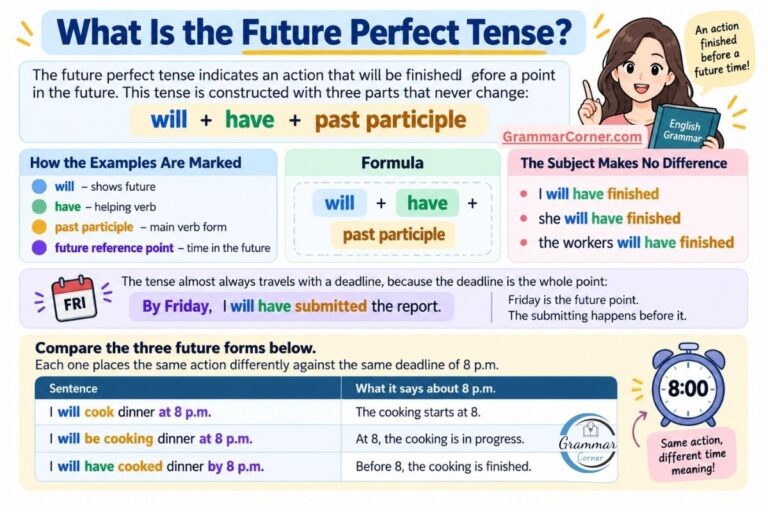
Future Perfect Continuous vs. Future Perfect
These two tenses are easy to confuse because both describe a future point. The difference is focus.
Future Perfect
Focuses on completion or result.
By June, I will have completed the course.
Future Perfect Continuous
Focuses on duration or ongoing activity.
By June, I will have been studying the course for six months.
Compare them:
| Future Perfect | Future Perfect Continuous |
|---|---|
| I will have written the report by Friday. | I will have been writing the report for three weeks by Friday. |
| She will have completed the course by June. | She will have been studying for six months by June. |
| They will have built the house by December. | They will have been building the house for a year by December. |
| I will have read five books by July. | I will have been reading regularly for several months by July. |
| We will have finished the project by Monday. | We will have been working on the project for eight weeks by Monday. |
A useful question to ask yourself is: Am I emphasizing the result or the duration?
If you are emphasizing what will be completed, use the future perfect.
If you are emphasizing how long an activity will have continued, the future perfect continuous is often more appropriate.
Future Perfect Continuous vs. Future Continuous
These tenses also describe future activities, but they focus on different ideas.
Future Continuous
Shows an activity in progress at a particular future time:
At 8 p.m., I will be studying.
Future Perfect Continuous
Shows how long that activity will have continued up to that future time:
At 8 p.m., I will have been studying for three hours.
| Future Continuous | Future Perfect Continuous |
|---|---|
| I will be working at noon. | I will have been working for four hours by noon. |
| She will be studying at 7 p.m. | She will have been studying for three hours by 7 p.m. |
| They will be traveling tomorrow. | They will have been traveling for ten hours by tomorrow evening. |
| We will be waiting at the station. | We will have been waiting for thirty minutes by then. |
Common Mistakes With Future Perfect Continuous
Forgetting “been”
The complete structure is:
Using the wrong verb form
The main verb must use -ing.
Forgetting “have”
Using the future after “by the time”
Use the present simple after by the time when referring to the future.
Confusing duration with completion
This incorrectly combines the continuous structure with a completed action.
Or, if you want to emphasize duration:
Future Perfect Continuous Speaking Challenge
Try answering these questions without looking at the model answers.
- How long will you have been working or studying by the end of this year?
- How long will you have been learning English by next year?
- How long will you have been living in your current home by 2030?
- How long will you have been working toward your main goal?
- How long will you have been practicing your favorite hobby?
- How long will you have been preparing for your next examination?
- How long will you have been saving for your next major purchase?
- How long will you have been using your current phone or computer?
- How long will you have been exercising regularly by next summer?
- How long will you have been working in your field by the time you retire?
Future Perfect Continuous Conversation Activity
This activity works well for two students.
Student A asks
How long will you have been studying by 8 p.m.?
Student B answers
I will have been studying for three hours.
Student A asks a follow-up
What will you have been studying?
Student B answers
I will have been studying English grammar.
Now change the time and activity:
- by lunchtime
- by the end of the day
- by Friday
- by the end of the month
- by next year
- by the time you graduate
- by the time you retire
The objective is to get the learner to produce a new answer each time.
All 12 tenses, in one place
English builds every tense from the same two ingredients — when (present, past, future) and aspect (simple, continuous, perfect, perfect continuous). Each tense below links to its chart and a set of practice conversation questions.
| Present Tense | Past Tense | Future Tense |
|---|---|---|