
Explore our collection of free printable grammar charts designed to help students, teachers, and ESL learners understand English grammar and punctuation more easily. The collection covers essential topics such as punctuation marks, parts of speech, nouns, pronouns, verbs, adjectives, adverbs, prepositions, conjunctions, interjections, and determiners.
Each chart presents grammar rules, definitions, functions, and examples in a clear, easy-to-review format. You will also find charts covering commas, semicolons, parentheses, question marks, apostrophes, quotation marks, hyphens, colons, periods, ellipses, and other punctuation marks. Comparison charts help learners understand commonly confused marks and their different uses.
These printable charts can be used as classroom resources, study aids, revision materials, or quick grammar references. Download and print the charts you need to review important grammar concepts, strengthen your understanding, and improve your English writing skills.
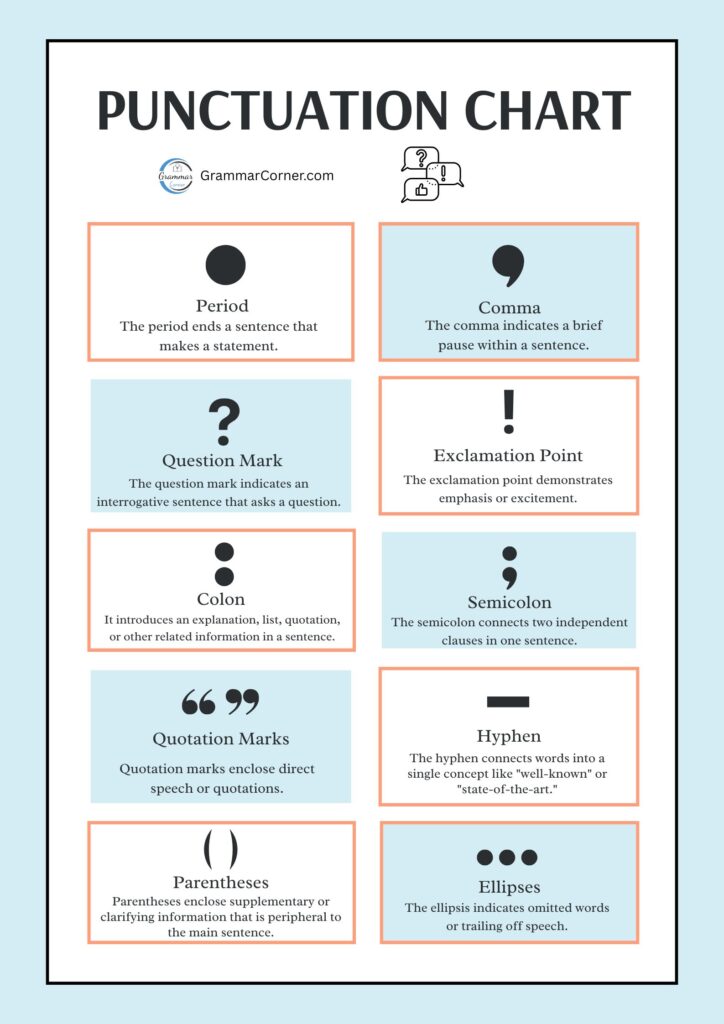
1. Punctuation Chart
Use this anchor chart to learn the punctuation marks in English. Each symbol like periods, commas, question marks, and quotation marks includes a brief explanation of its purpose, making it easier to understand how punctuation improves meaning and sentence structure.
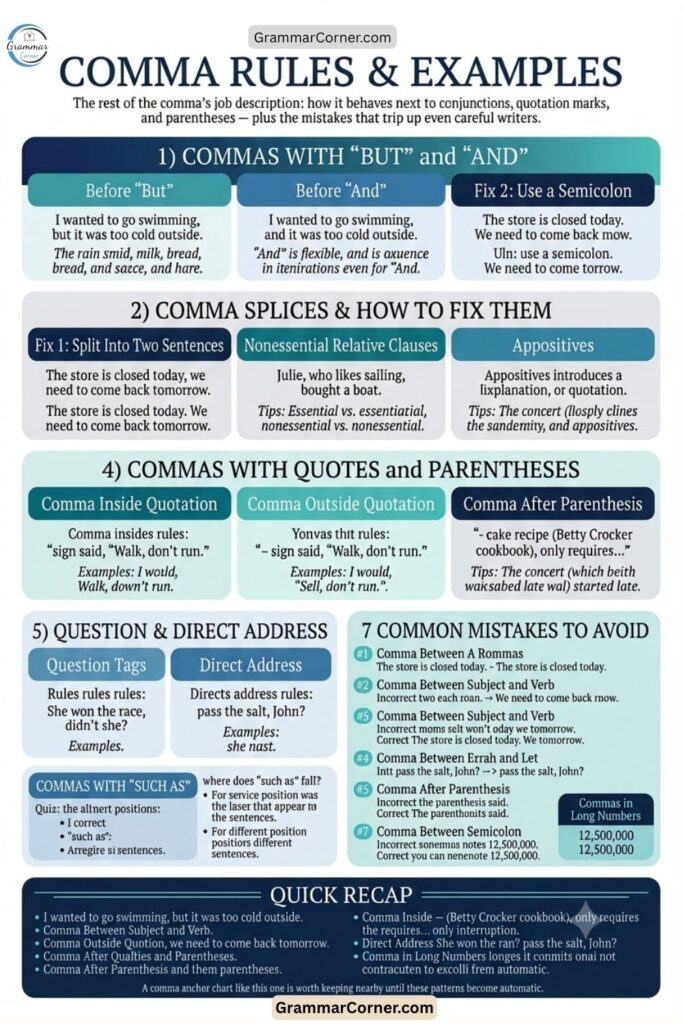
2. Comma Chart
This comma chart summarizes the most important comma rules. It shows where commas belong in sentences, highlights common situations that require them, and includes clear examples to help learners improve punctuation, readability, and overall writing accuracy with confidence.
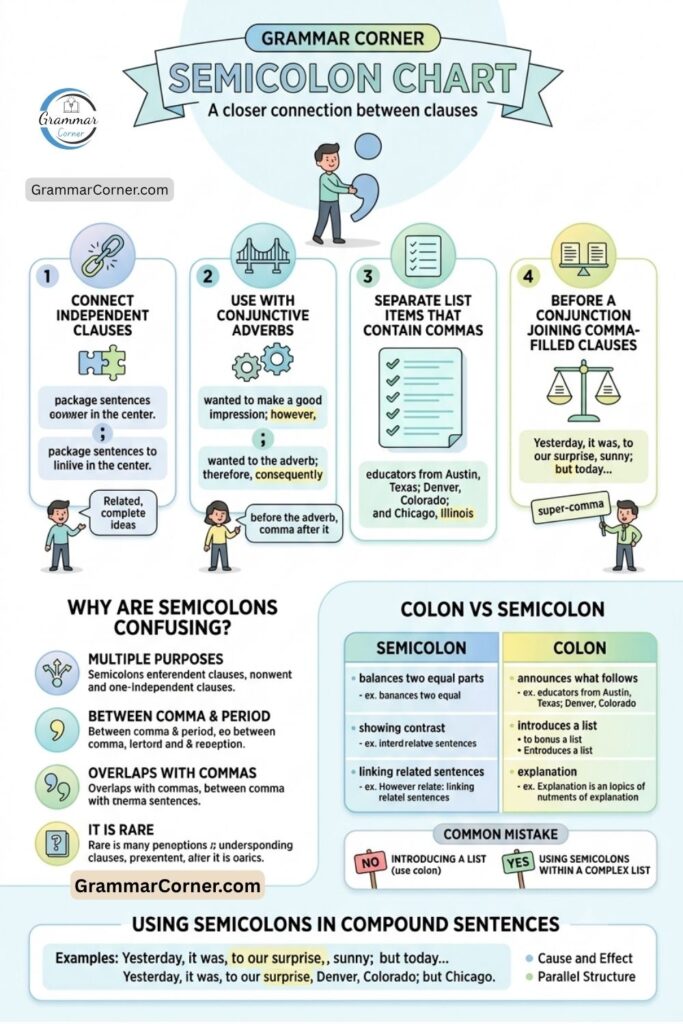
3. Semicolon Chart | How to use semicolon?
Mastering semicolons becomes easier with this practical reference chart. Clear explanations and carefully chosen examples show how semicolons connect related ideas, separate complex list items, and create smoother, more polished sentences in both academic and everyday writing.
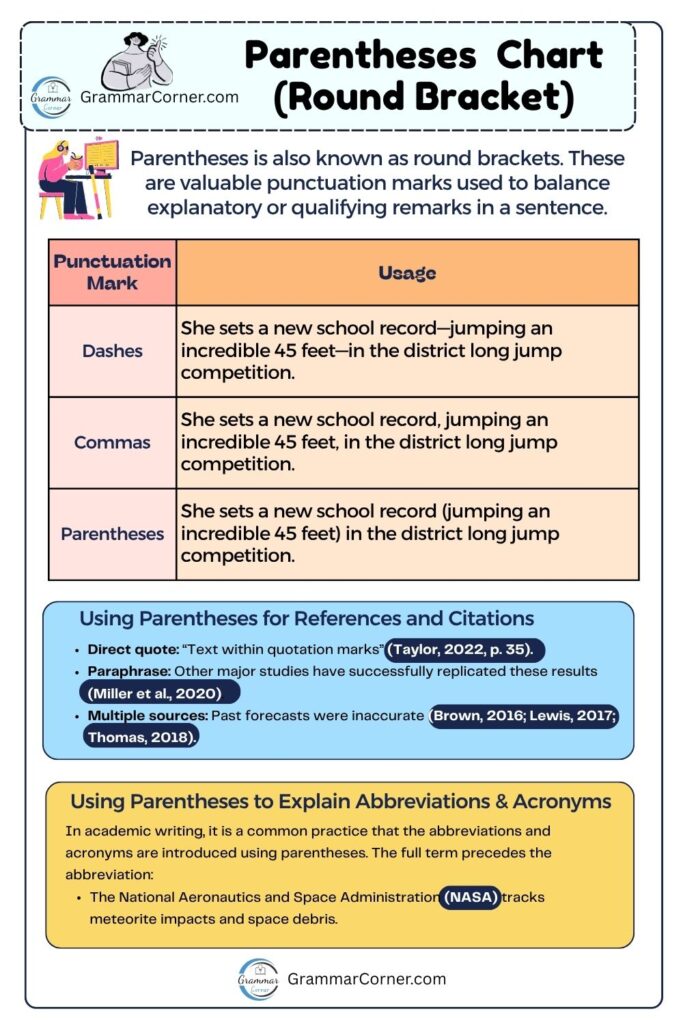
4. Parentheses Chart (Rules and Examples)
Parentheses help add extra details without interrupting the main idea of a sentence. This chart explains their most common uses with straightforward examples, making it easy to understand when additional information should be enclosed in round brackets.
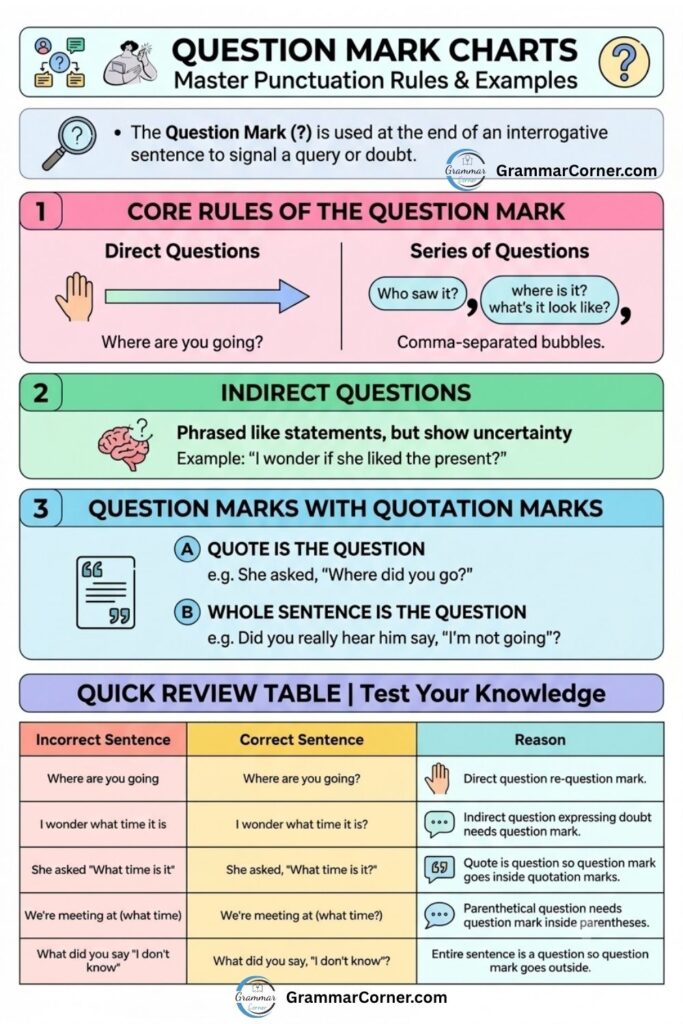
5. Question Mark Chart | When and where to use?
Knowing when to end a sentence with a question mark is an essential writing skill. Easy-to-follow explanations and examples in this chart help learners recognize direct questions and apply the correct punctuation every time. This chart also explains where question marks belong and highlights common mistakes to avoid, that help learners punctuate direct questions with confidence.
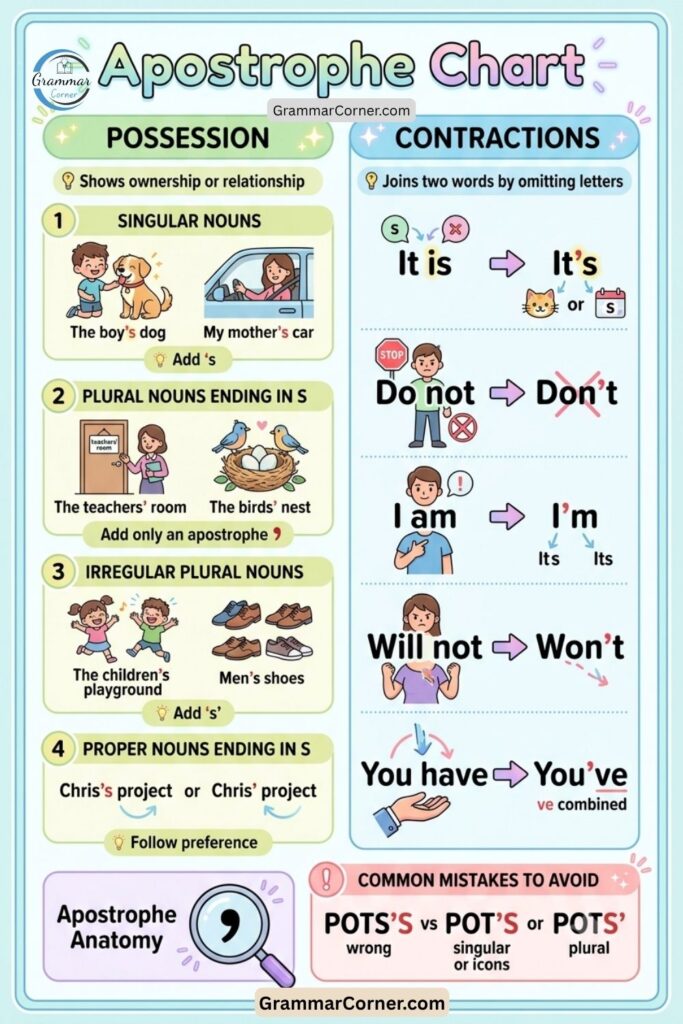
6. Apostrophe Made Simple
Learn the difference between apostrophes used for possession and contractions with this easy-to-follow chart. It explains the key rules, highlights common mistakes, and provides clear examples that help learners use apostrophes accurately in everyday writing
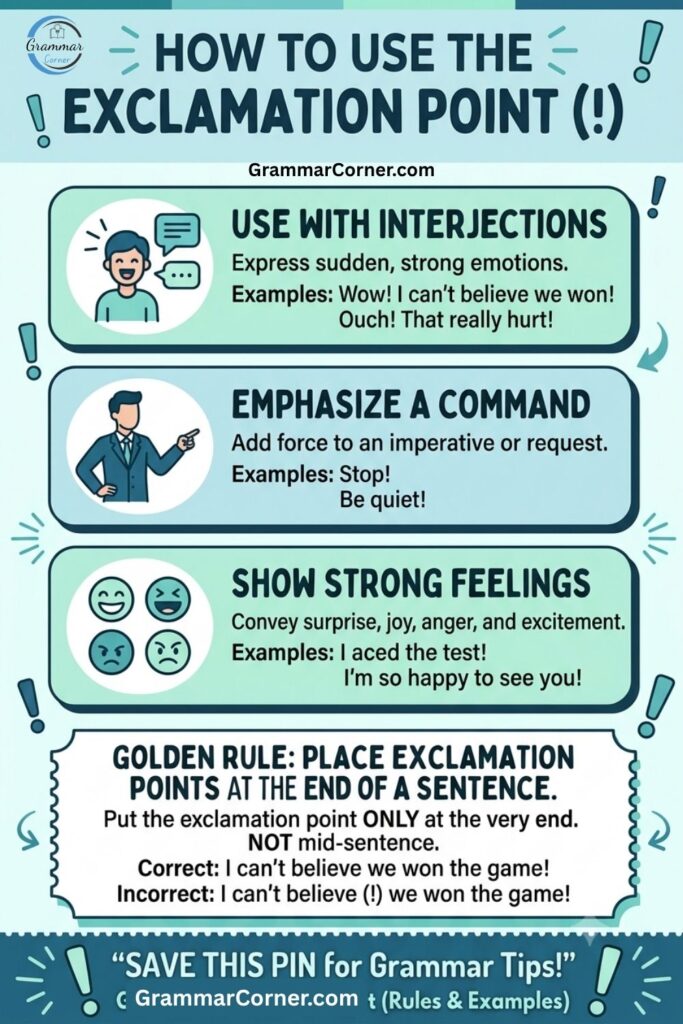
7. Exclamation Point Chart
Strong emotions, excitement, surprise, and emphasis all rely on careful punctuation mark i.e. exclamation point. Designed as a quick classroom reference, this chart helps learners build confidence and develop better punctuation habits through clear visual organization and practical examples.
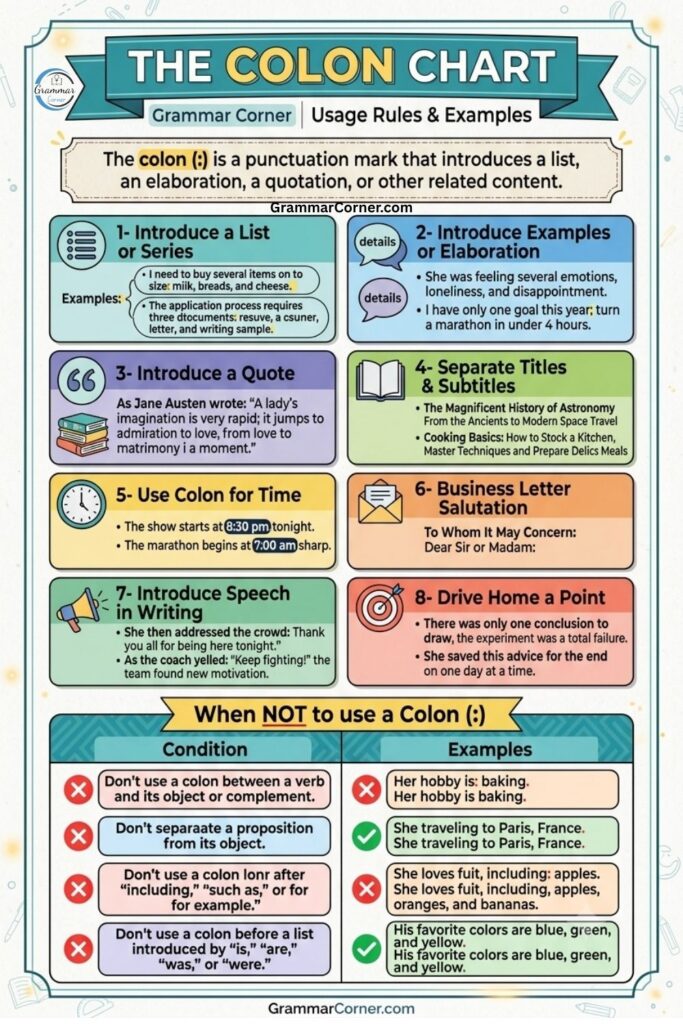
8. Colon Anchor Chart
The colon is the important punctuation tool to elaborate something in a sentence. This chart shows eight different jobs a colon can do, like introducing a list, telling time, or starting a quote, etc. However, there are some exceptions, when use of this punctuation mark is prohibited. Read this chart along with the given below guide of punctuation to better understand about colon.
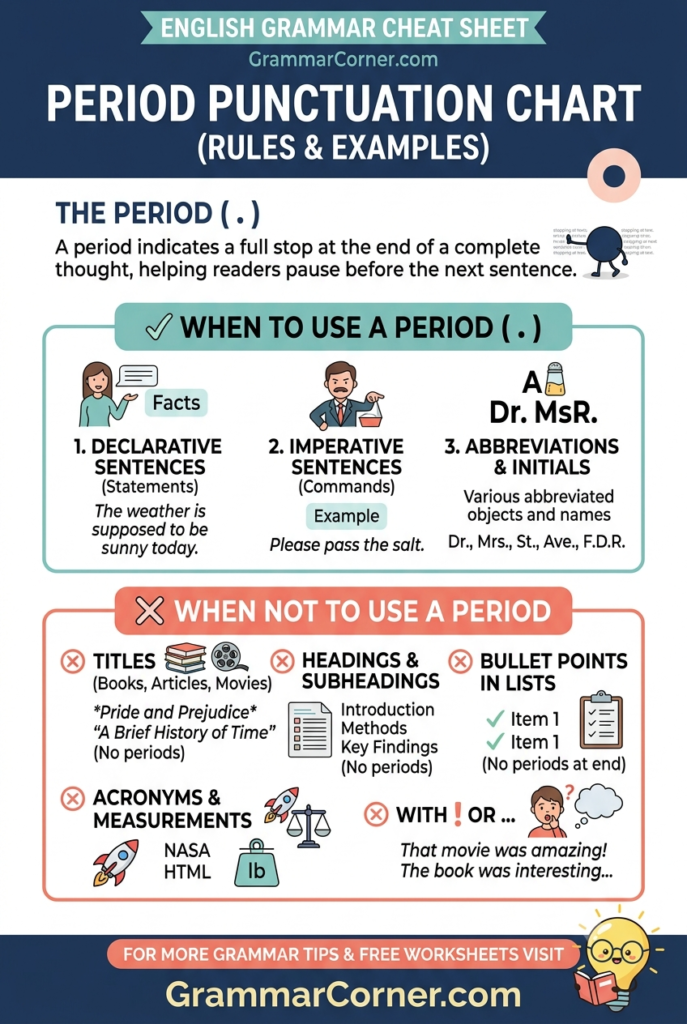
9. Period
A period may seem like the simplest punctuation mark, yet using it correctly is essential for clear communication. The essential rules for using periods in everyday writing with this easy-to-read anchor chart have been properly explained. This chart brings together the most important rules, common exceptions, and real-life examples, giving students and writers a quick reference for using full stops correctly in any context.
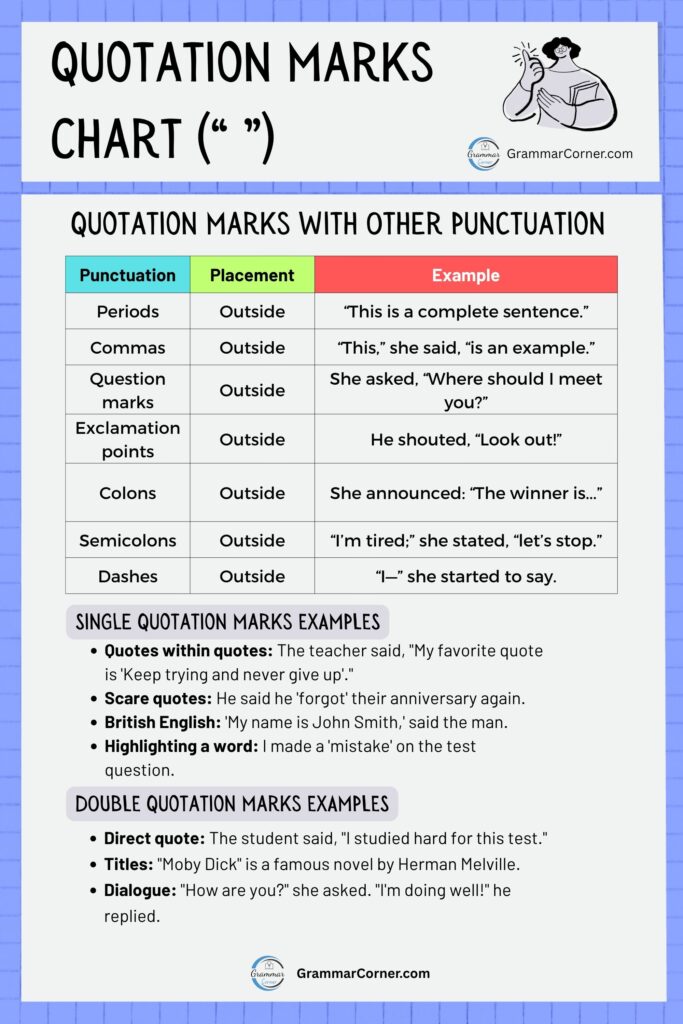
10. Quotation Marks Chart
Covering the most important quotation mark rules in one place, this chart explains when to use double and single quotation marks, how to punctuate direct speech and dialogue, where commas and periods belong, how to format titles and nested quotations, and the common mistakes to avoid, with clear examples throughout.
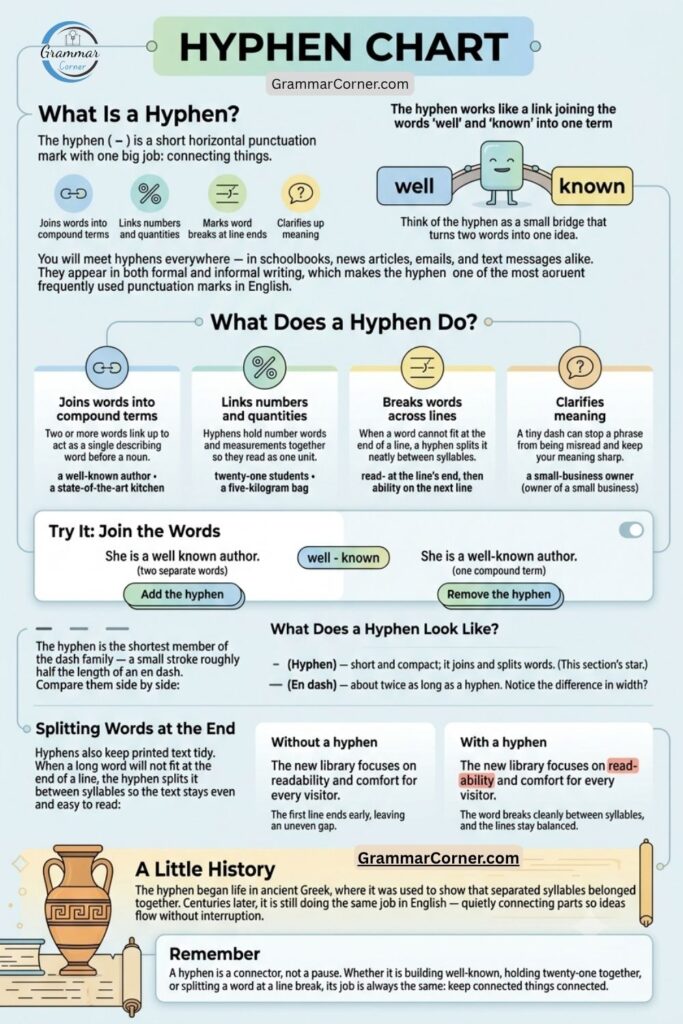
11. Hyphen chart | How to Use a Hyphen (-)?
Bring all the essential hyphen rules together with this easy-to-use reference chart. It covers compound words, compound modifiers, prefixes, number-based expressions, and other common uses, while practical examples and usage tips help learners avoid frequent hyphenation mistakes in everyday writing.
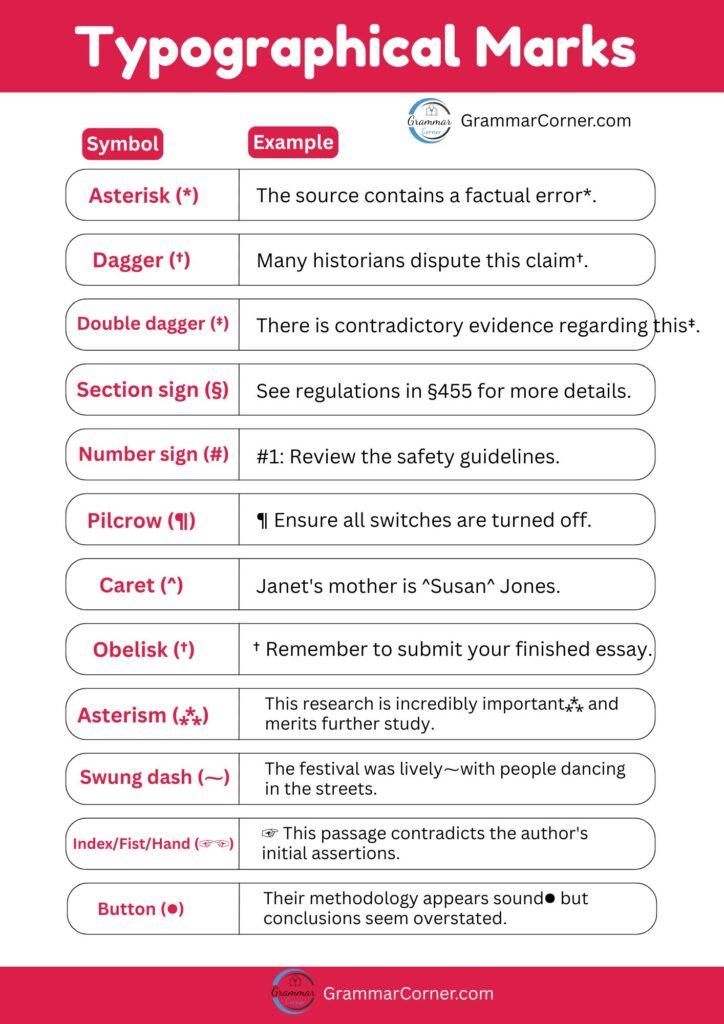
12. Typographical Marks Chart
Understanding typographical marks is essential for clear and polished writing. This chart brings together commonly used symbols, explains their purpose and correct usage, and includes simple examples that help learners recognize when and where each mark should be used.
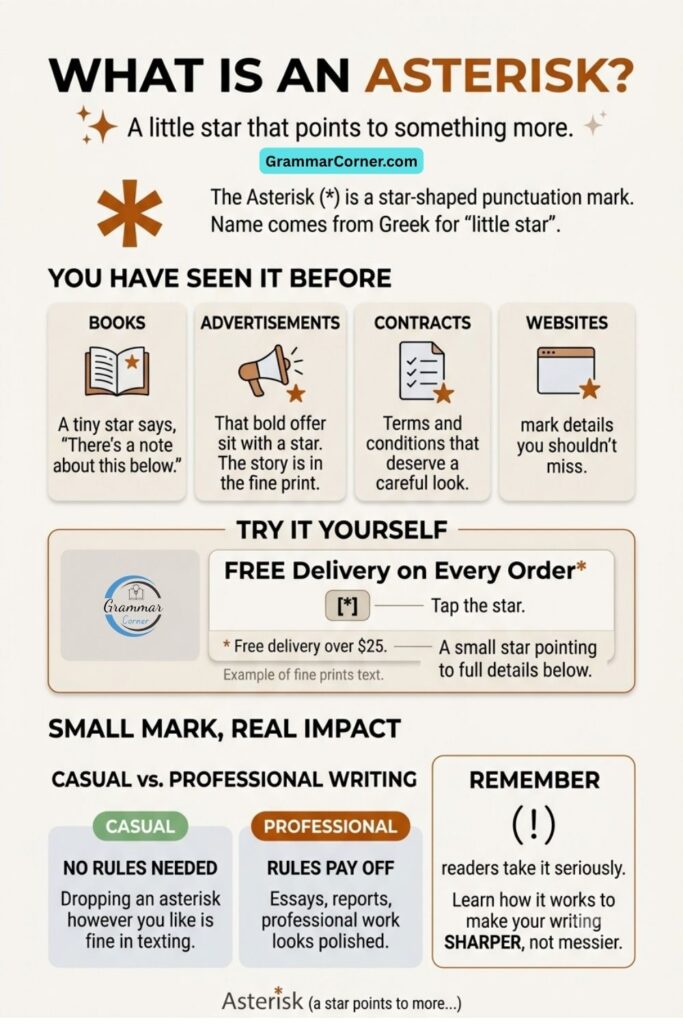
13. Asterisk Chart
Discover the many uses of the asterisk with this detailed anchor chart. It explains the symbol’s purpose, covers its role in footnotes, annotations, corrections, omitted letters, and other common writing conventions, and includes clear examples, usage tips, and common mistakes to help learners use the asterisk correctly.
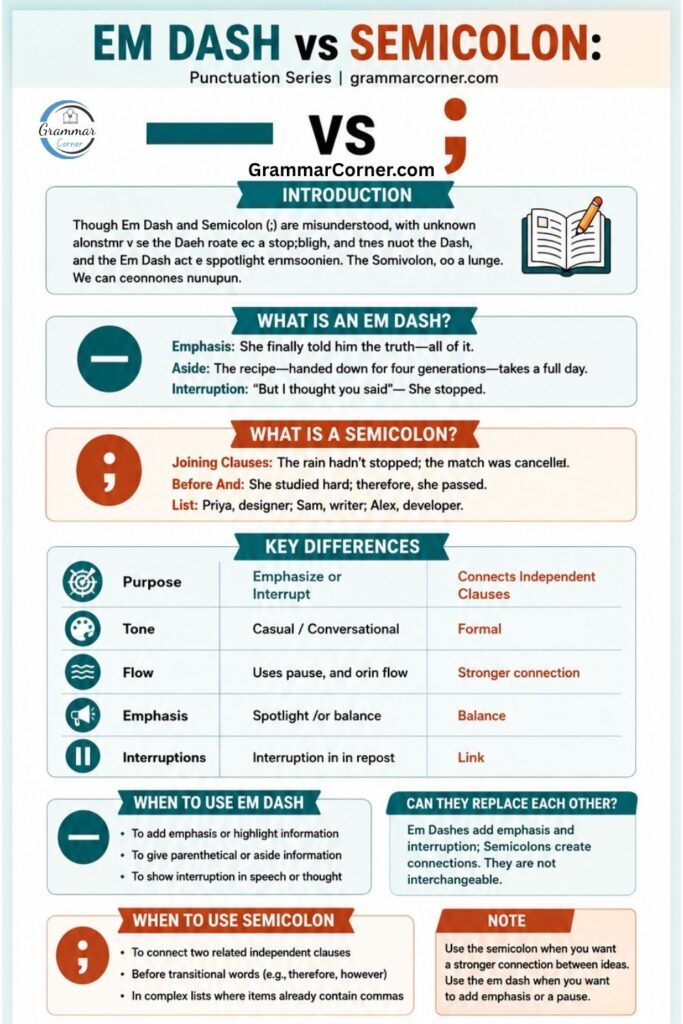
14. Em Dash vs. Semicolon Chart
The key differences between the em dash and the semicolon with this comparison chart has been properly explained. This chart compares their uses, explains how each punctuation mark connects ideas, points out their differences, and provides practical examples that make it easier to apply the correct mark in different writing situations.
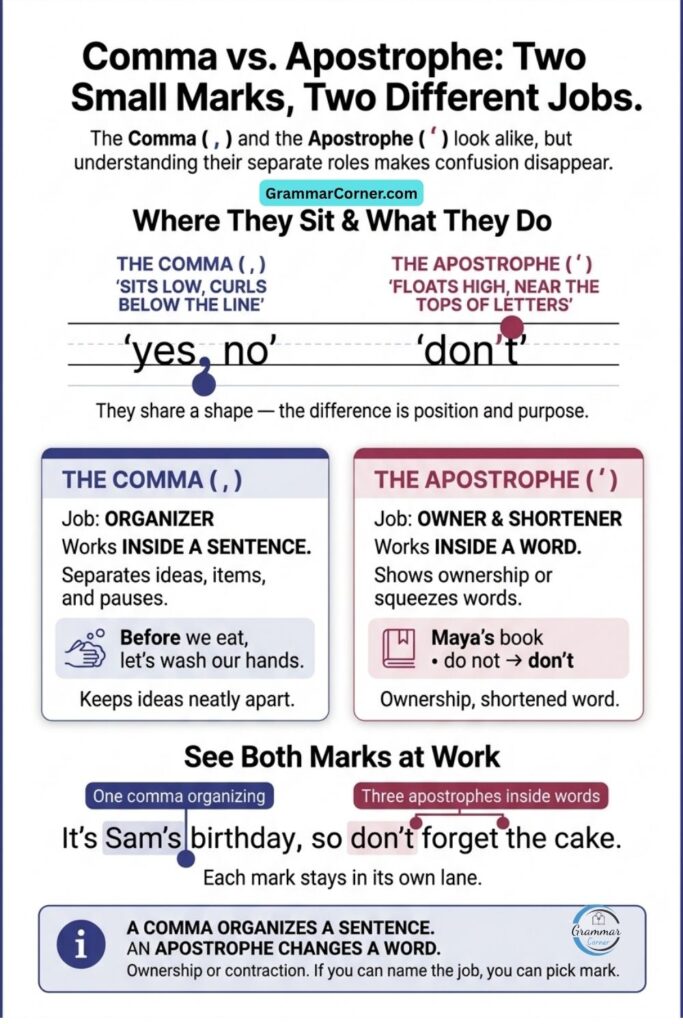
15. Comma vs. Apostrophe Chart
Many learners confuse commas and apostrophes because they serve very different purposes. This comparison chart outlines the role of each punctuation mark, explains when to use a comma or an apostrophe, highlights their major differences, and reinforces the rules with clear examples for accurate writing.
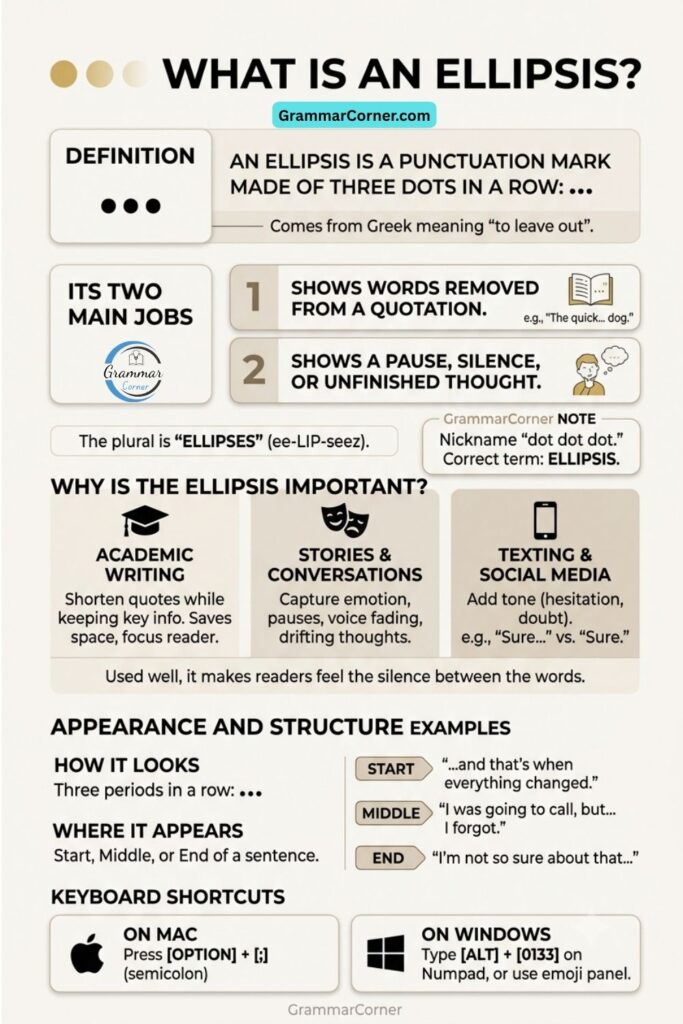
16. What Is an Ellipsis (…)?
Learn how to use ellipses correctly with this comprehensive reference chart. It explains the purpose of the ellipsis, outlines its most common uses in writing, compares appropriate and inappropriate usage, and includes clear examples to help learners apply this punctuation mark accurately and confidently.
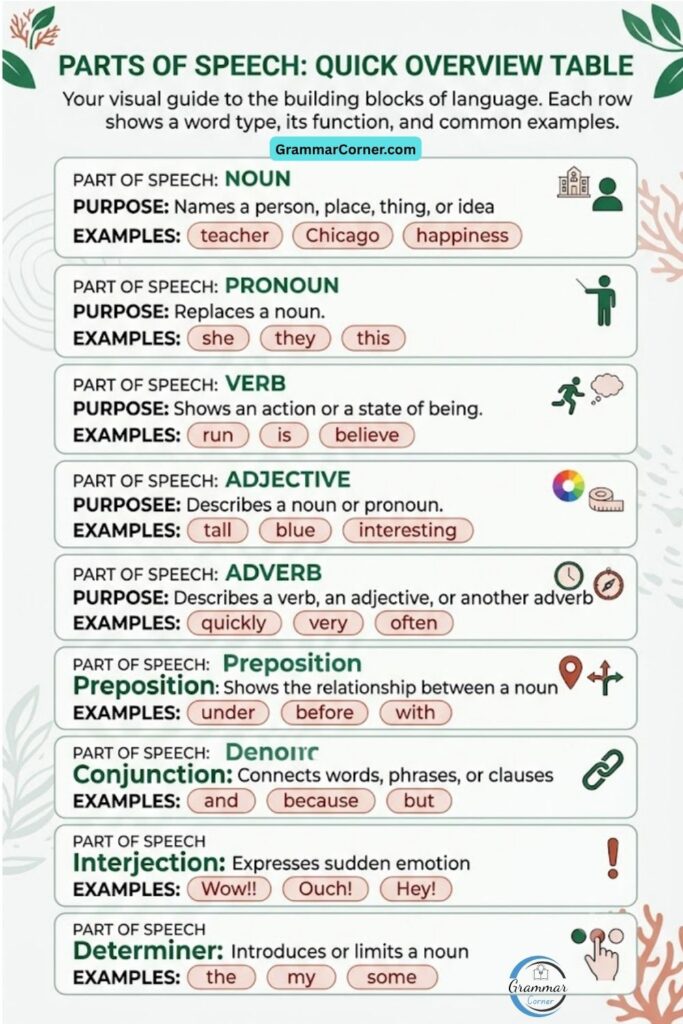
17. Parts of Speech Table (Types and Examples)
This Parts of Speech Table provides a quick overview of the eight parts of speech in English grammar. It explains each word class with its function and examples, helping students, teachers, and ESL learners understand how nouns, verbs, adjectives, adverbs, and other parts of speech are used in sentences.
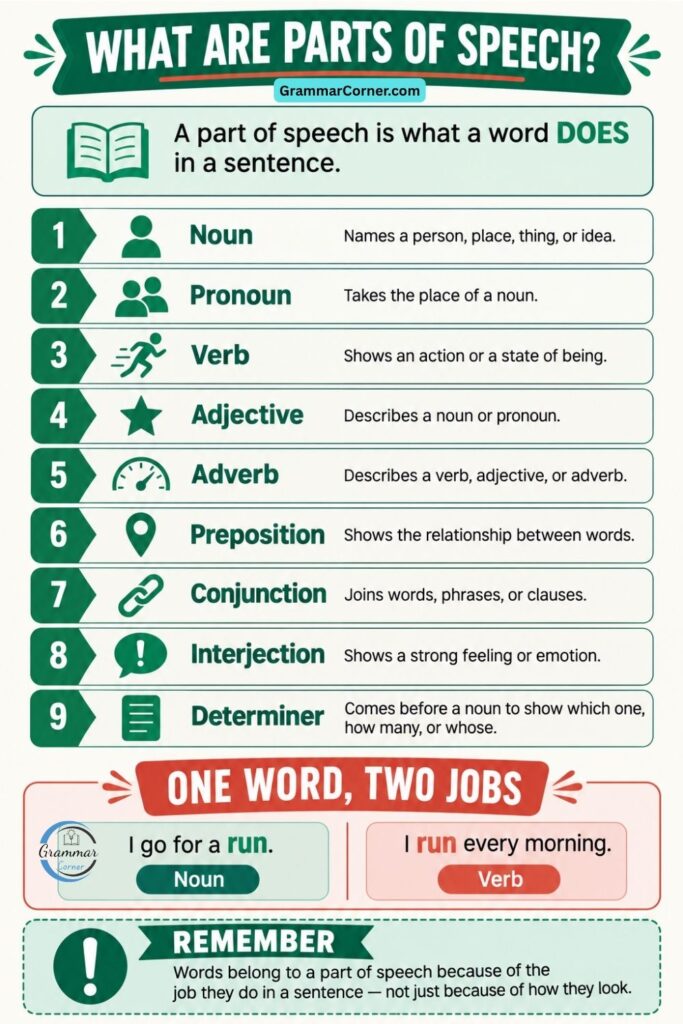
18. Parts of Speech Chart
Get a complete overview of the nine parts of speech with this easy-to-read anchor chart. It introduces each word class with its definition, grammatical function, and examples, while showing how nouns, pronouns, verbs, adjectives, adverbs, prepositions, conjunctions, interjections, and articles work together to form clear and meaningful sentences.
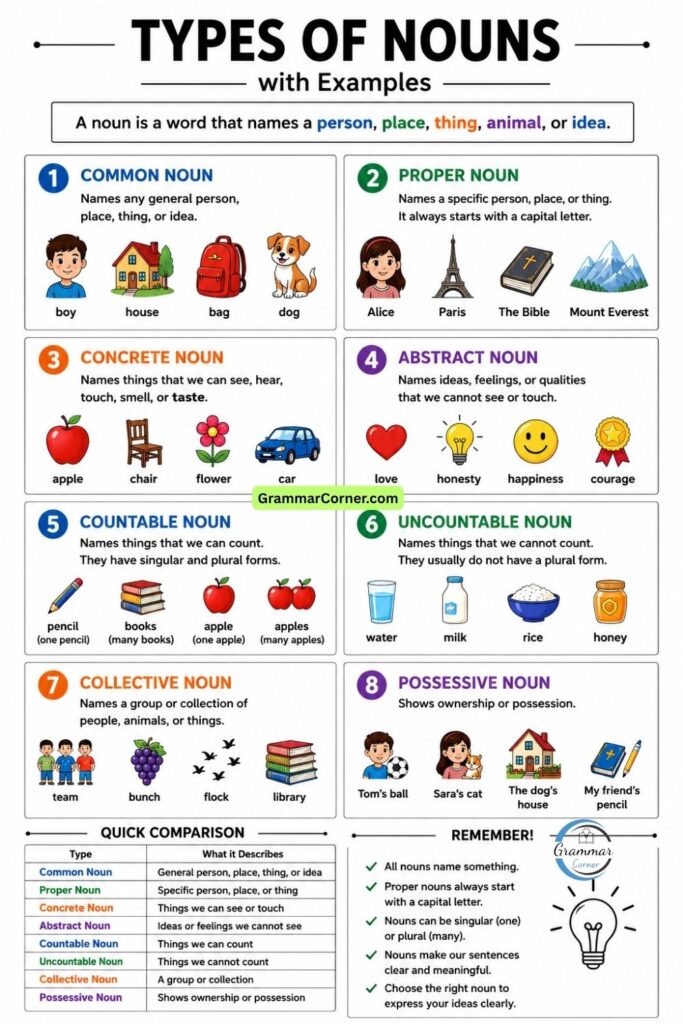
19. Nouns Chart (Types & Examples)
This chart gives an insight view about the noun and its types. Each type of noun has been properly explained while quoting their examples. This meaningful chart will help the learners to properly understand and use it in English sentences.
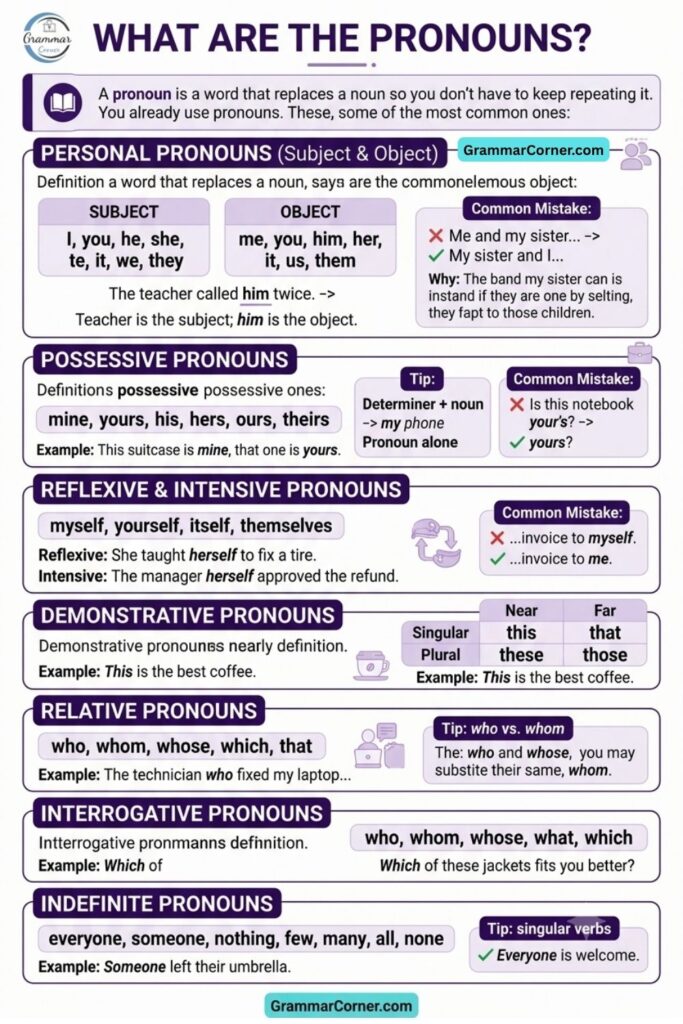
20. Pronouns Chart (Types & Examples)
Some words are used in place of nouns, and these words are called pronouns. This chart explains the different types of pronouns, including personal, possessive, reflexive, demonstrative, relative, interrogative, and indefinite pronouns, with clear examples. Understanding these types helps ESL learners to use pronouns correctly in sentences and develop a better understanding of the ideas being explained.
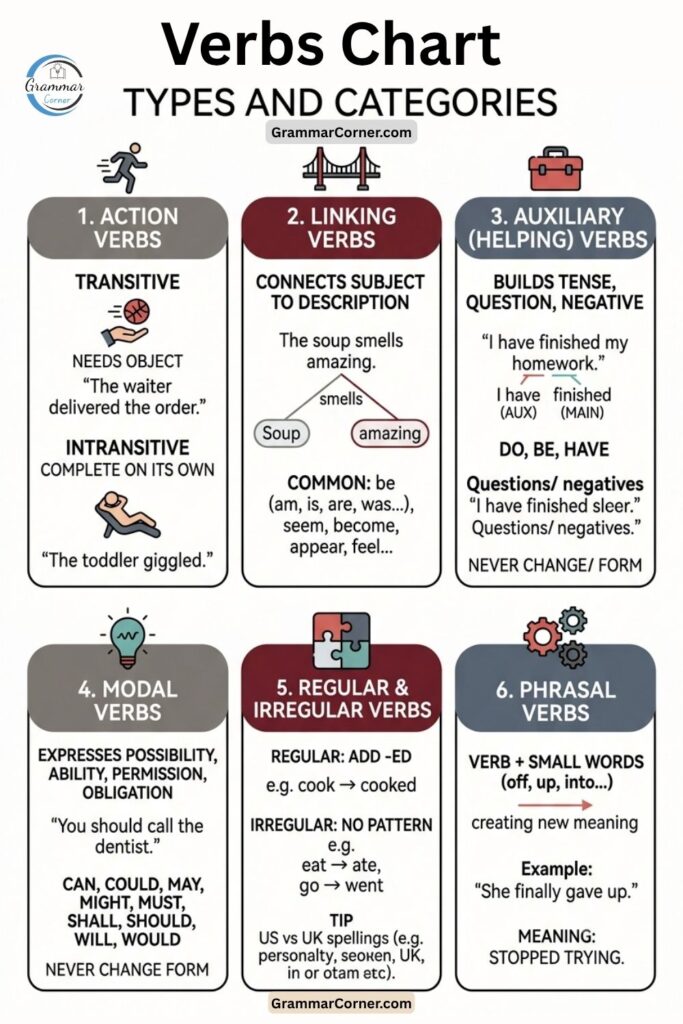
21. Verbs Chart (Types & Examples)
Verbs play a vital role in forming meaningful sentences. Some verbs express actions, while others act as linking verbs that connect the subject with additional information. Verbs can also be used to express states, conditions, events, and changes. In this charge, Different kinds of helping verbs, such as “be”, “have”, and “do”, work with main verbs to form tenses, questions, negatives, and other sentence structures. Understanding these different types of verbs helps learners use them correctly and communicate their ideas clearly.
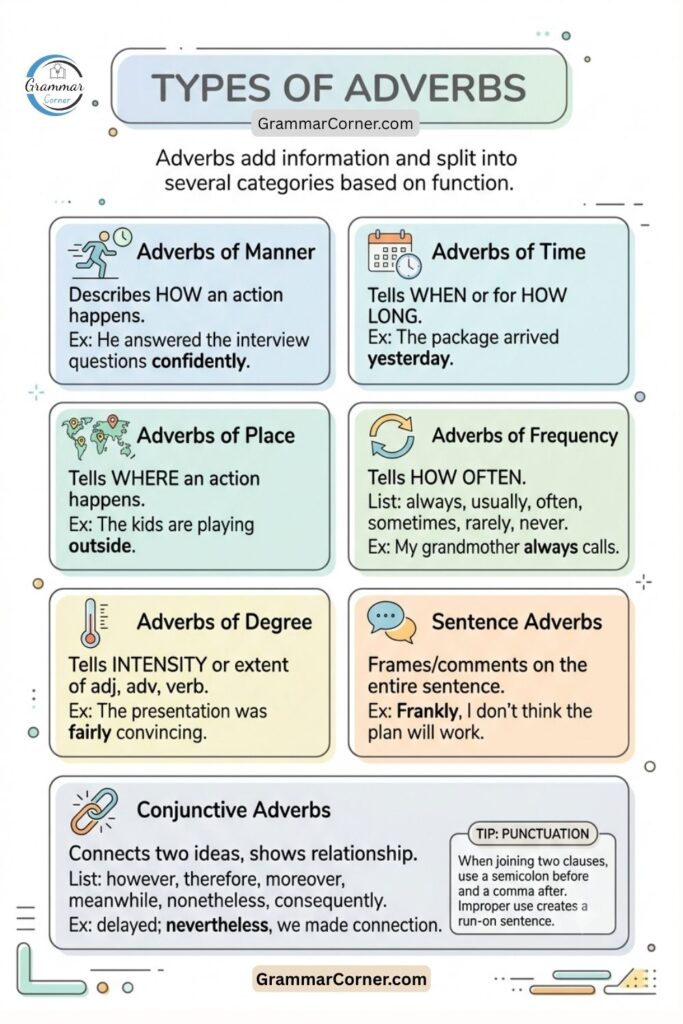
22. Adverbs Chart (Types & Examples)
Adverbs perform different functions in a sentence and provide additional information about an action, description, or another adverb. This chart explains the different types of adverbs, their roles, and their usage with examples. Adverbs can answer questions such as “how”, “when”, “where”, “how often”, and to what extent, helping learners understand how they add meaning and detail to sentences.
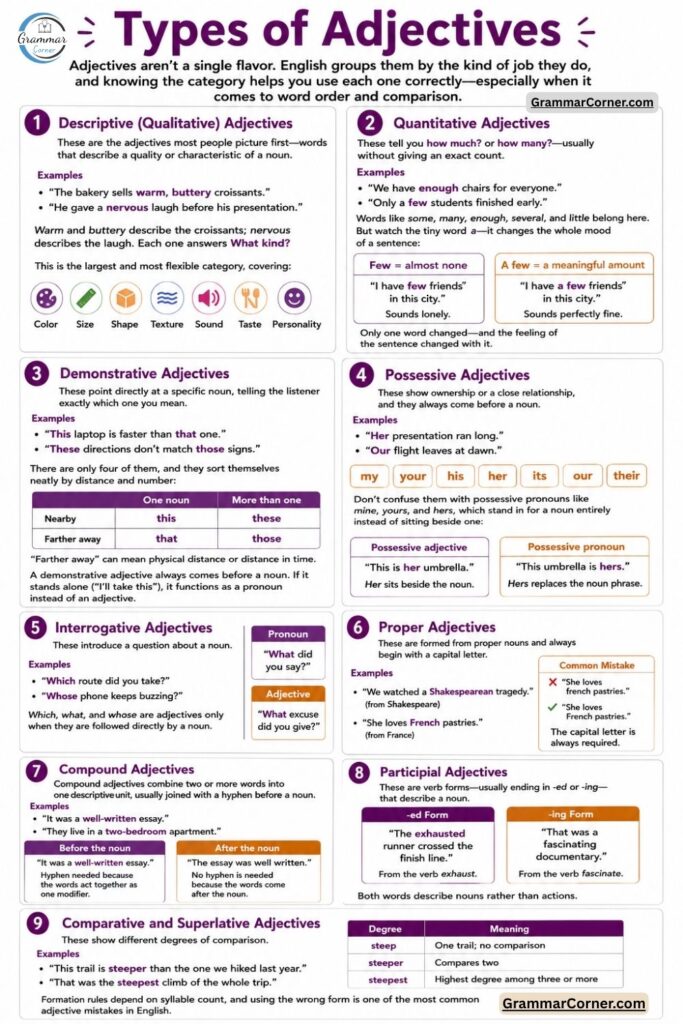
23. Adjectives Anchor Chart (Types, Examples, Rules)
This chart explains the different types of adjectives, their roles, and their usage with examples. Adjectives can describe qualities, quantities, numbers, colors, sizes, and other characteristics, helping learners understand how they add detail to sentences.
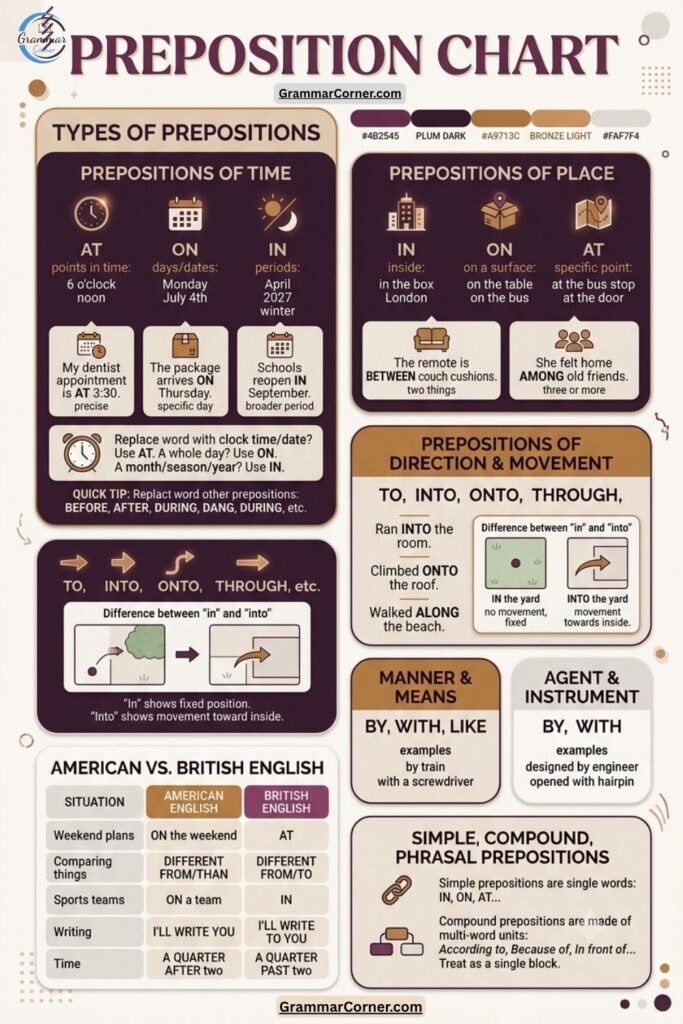
24. Prepositions Chart (Types & Examples)
Prepositions perform an important function in a sentence by showing the relationship between words. This chart explains different types of prepositions, their roles, and their usage with examples. Prepositions can show “place”, “time”, “direction”, “movement”, and other relationships, helping learners understand how words connect and how prepositions are used correctly in sentences.
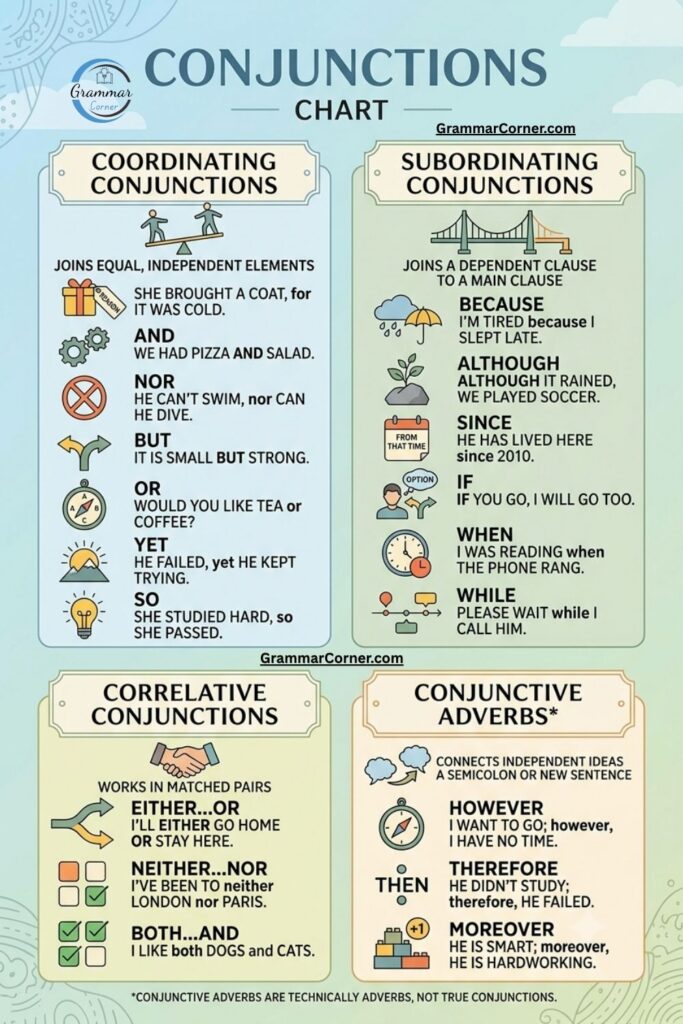
25. Conjunctions Chart
Conjunctions are used to connect words, phrases, and clauses. This chart explains the different types of conjunctions, their roles, and their usage with examples. Conjunctions can show relationships such as addition, contrast, choice, reason, condition, and result, helping learners understand how ideas are connected and how to form clear, meaningful sentences.
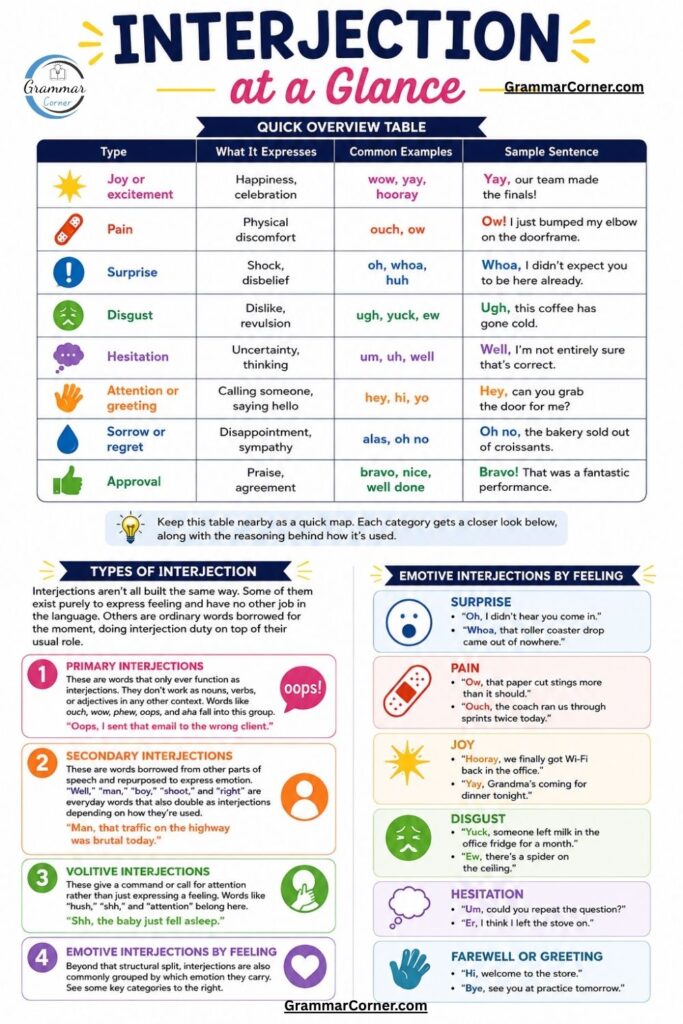
26. Interjection Anchor Chart
In a sentence, Interjections perform an important function to describe sudden feelings, emotions, or reactions. This chart explains the different types of interjections, their roles, and their usage with examples. Interjections can express “joy”, “surprise”, “sadness”, “excitement”, “anger”, “pain”, and other emotions, helping learners understand how these words add feeling and emphasis to sentences.
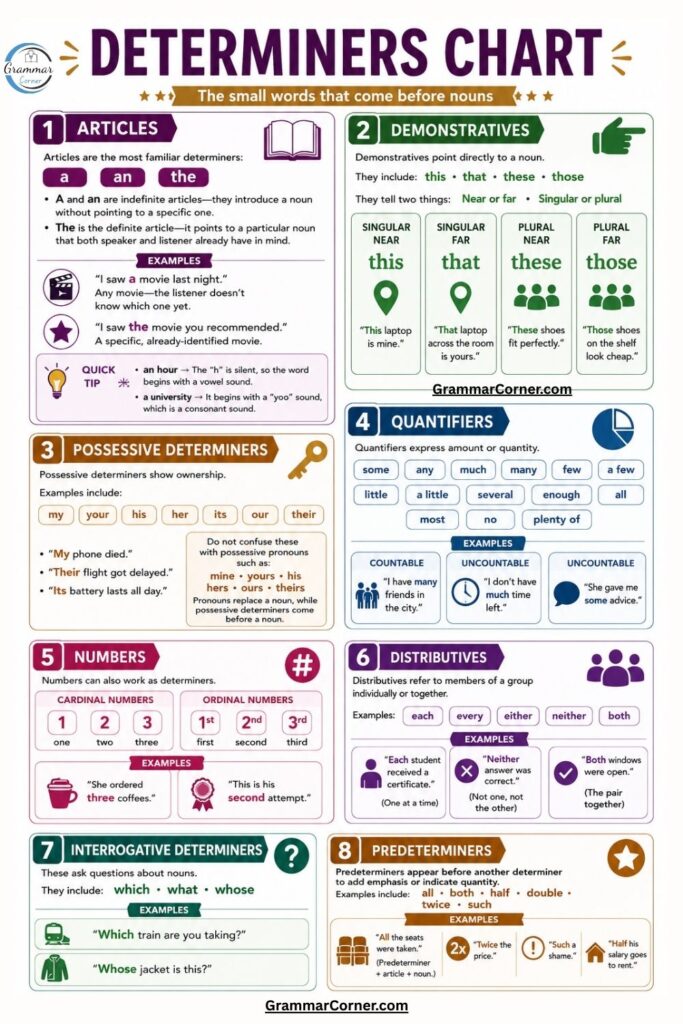
27. Determiners Chart
Determiners perform an important function in a sentence by providing information about nouns and showing whether they are specific, general, singular, plural, or related to quantity. This chart explains the different types of determiners, their roles, and their usage with examples. Understanding determiners helps learners use nouns more accurately and form clear, grammatically correct sentences.
